2026 FOCAL International Awards Shortlisted Nominees
The FOCAL Awards celebrate three areas – production, restoration and preservation, and people. All our production categories celebrate the very best use of footage within the production, programme or project.
Please select the award category you wish to view from the drop down box.
Shortlisted
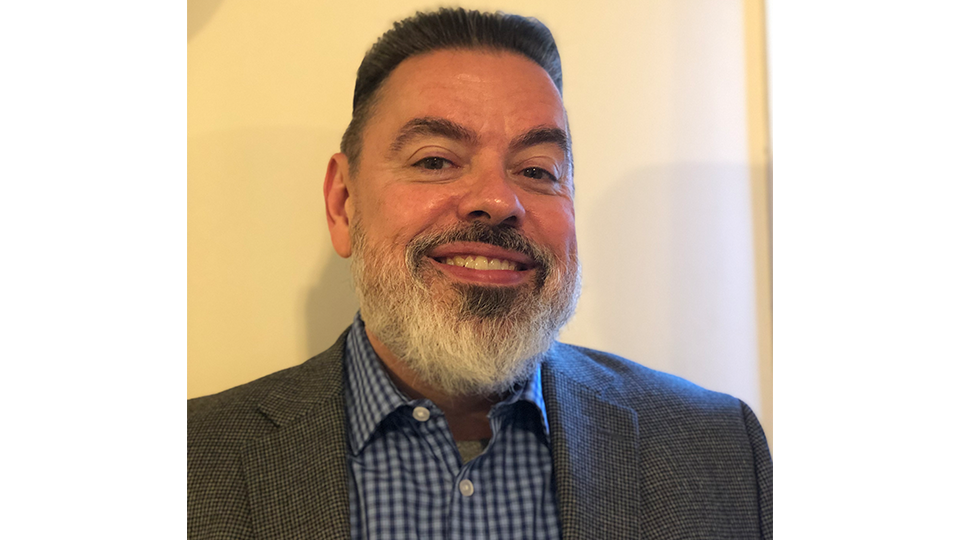
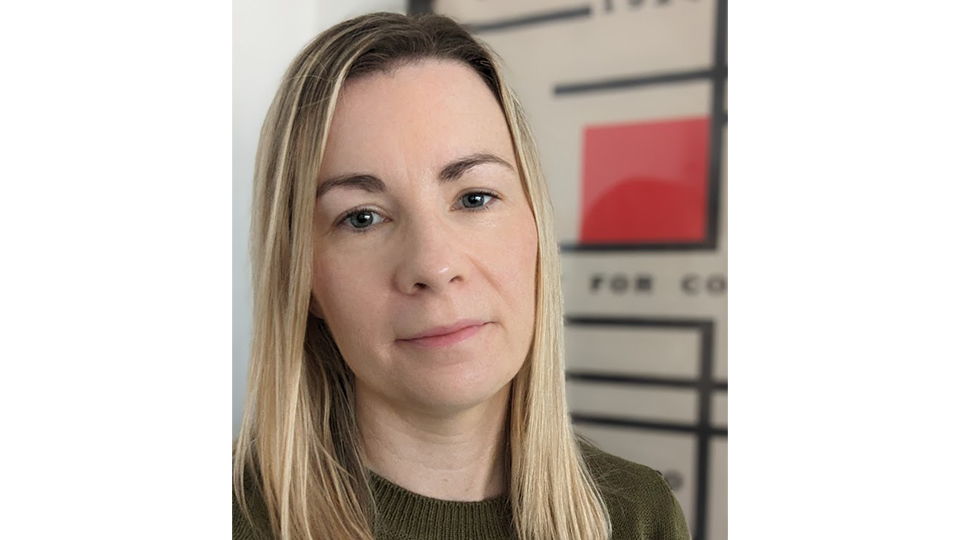
Christopher Morgan
Job Title:
Business Development Manager
Company:
Reuters Connect
Archival highlights
The following are highlights from the submission:
Christopher demonstrated extraordinary dedication in supporting the complex retrieval and rescanning of original film elements for our feature documentary. Rather than relying on existing masters, he championed our commitment to visual fidelity by helping us access and rescan original film materials at 2K and 4K resolution — preserving the integrity of the format in which the footage was first shot.
Many of these elements were housed in off-site cold storage preservation facilities, requiring careful coordination across locations, vendors, and archive teams. Christopher personally oversaw the identification and retrieval of numerous film cans from deep storage, ensuring the correct elements were located before work could even begin. Several reels required careful cleaning prior to scanning, adding another layer of hands-on preparation. In one particularly delicate case, a nitrate reel had been held together with small metal clips that had to be removed manually, one by one, before the film could safely pass through the scanner—a painstaking process that underscored both the fragility of the material and Christopher’s commitment to preserving it properly. As deadlines shifted and last-minute creative adjustments required additional materials, he responded not only with technical expertise but with a collaborative, solutions-driven approach, ensuring that historically significant footage could be preserved while remaining accessible for modern storytelling.
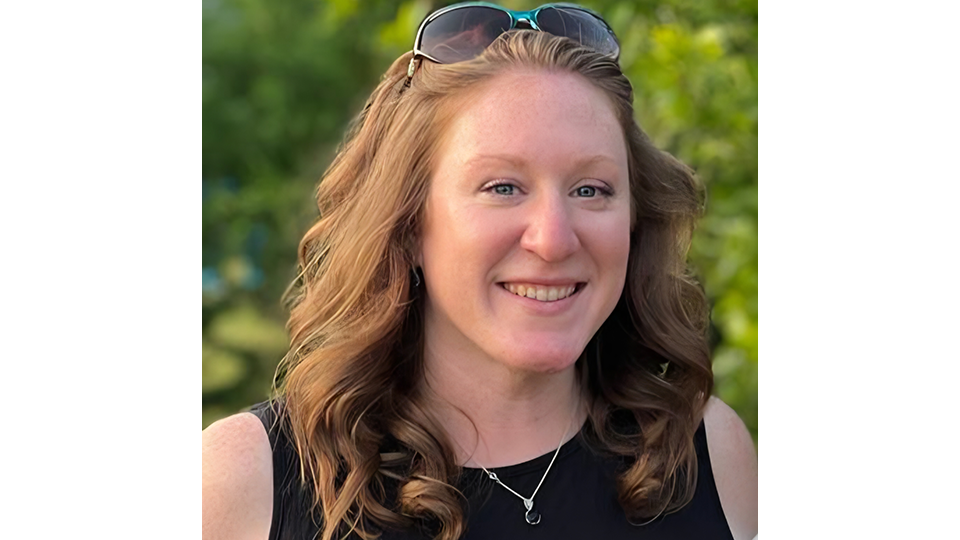
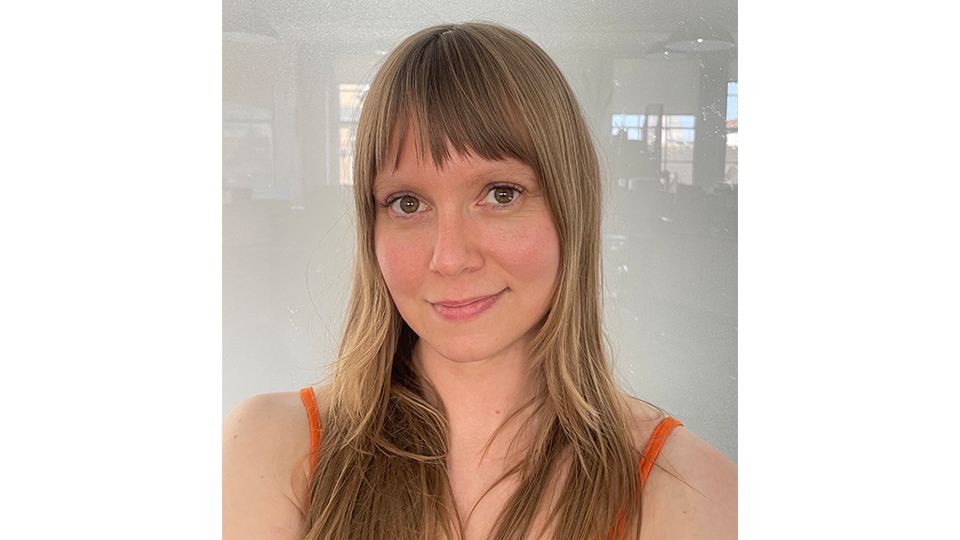
Megan McCooley
Job Title:
Co-Director | Head of Collections
Company:
Yorkshire and North East Film Archive
Archival highlights
The following are highlights from the submission:
Megan has driven the Archive's Strategic Plan 2025-2030 which clearly outlines the Archive's future vision and direction. She was central to writing the strategy and developing the core organisational values of ‘Innovation with Integrity’, ‘Respect for Communities’, and ‘Open to Ideas’ which underpin the work of the Archive, ensuring the organisation operates with integrity, transparency, and collaboration.
In August 2025, Yorkshire and North East Film Archive merged with York St John University to form a partnership dedicated to saving and celebrating the Regions' Screen Heritage. Megan was instrumental in the merger process, bringing an increased stability and a more secure future for the Archive against the backdrop of financial uncertainty which many in the archive sector face. Her passion for the Collection and long-standing commitment to the Archive was integral to ensuring our Collection remains accessible to audiences for generations to come.
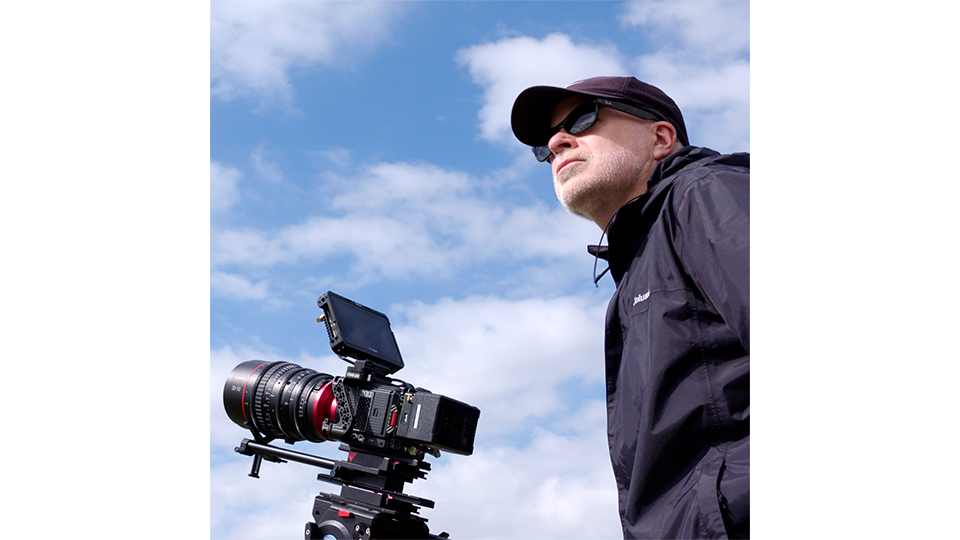
Martin Lisius
Job Title:
Founder & Cinematographer
Company:
StormStock
Archival highlights
The following are highlights from the submission:
Innovation is Martin's greatest strength. He is a cinematic artist who pushes the creative envelope. He was the first among footage sources to produce and license 16K footage. And, in the past year, he has experimented with new ways to capture lightning (one of our specialties) without "flash banding" and with perfect exposure. The results of his efforts are amazing. What he has accomplished for the screen is equaled by only what we see in person, under a storm.
R3store Studios
Synopsis
Established in 2016 and celebrating its 10th anniversary this year, R3store Studios has rapidly grown into one of the UK’s leading archive and restoration specialists. The studio offers a comprehensive range of services, including film scanning, colour grading, tape digitisation, and digital restoration, all delivered with a focus on preserving the integrity of original materials. Working with a diverse client base from film archives and cultural institutions to brands, broadcasters and commercial media organisations. R3store is trusted with projects of significant historical and cultural value, playing an important role in safeguarding audiovisual heritage for future generations. Following a move into brand new premises in 2025, the studio is expanding its outreach, opening its doors to more tours and training opportunities than ever before, and reinforcing its commitment to education and industry collaboration.
Archival highlights
The following are highlights from R3store Studios submission:
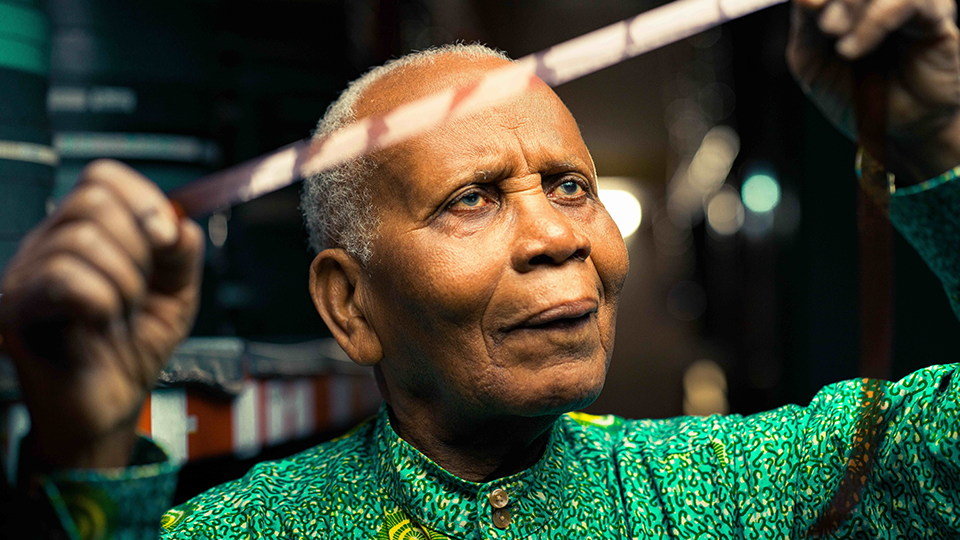
R3store has demonstrated significant impact through its restoration work on major archival-led cinematic productions, including the complete restoration of all archival footage for our feature documentary, THE EYES OF GHANA. In delivering this work, the company refined its approach to complex, multi-format restoration by implementing highly adaptable, clip-specific workflows capable of handling material ranging from standard-definition broadcast footage to newly scanned 4K film elements across varying frame rates and conditions.
Importantly, R3store has been a partner on this project since its earliest stages in 2023, when we first engaged them to digitize the Chris Hesse/Ghana film archive. From the careful handling and high-resolution scanning of these original elements to the final preservation-grade restoration, their involvement has spanned the full lifecycle of the film. This continuity ensured both technical consistency and a deep familiarity with the material that proved invaluable as the production evolved.
Beyond the technical execution, R3store strengthened collaborative workflows between archives, scanning facilities, and post-production teams, helping productions navigate increasingly compressed delivery schedules without sacrificing quality. They also graciously opened their facilities to our production, allowing us to film on-site with our storyteller, Chris Hesse, and several of their diligent team members appear in the documentary itself. Their openness and enthusiasm reflected not only technical excellence, but a genuine commitment to the storytelling process.
Through projects such as this, R3store continues to advance restoration best practices, client workflow integration, and high-resolution archival presentation—delivering tangible benefits to both its clients and the wider archival and post-production community, while helping position archival footage as a central cinematic element rather than supplemental material.
Reuters Connect
Archival highlights
The following are highlights from the Reuters Connect submission:
In 2025, Reuters Connect (formerly Reuters Screenocean) believe we have demonstrated our commitment to the industry across archival preservation, discovery and access.
Our submission highlights the impact of these initiatives: Enhancing storytelling with newly digitised rushes and providing a platform for emerging filmmakers to gain visibility.
Building on work to make tape archives held by Reuters news bureaus around the world accessible, in 2025 we established permanent in-house infrastructure to continue this work indefinitely, and we marked the milestone of digitising more than 7,000 hours of video from 16 bureaus worldwide.
We established the Reuters Media Ingest Hub: a permanent, end‑to‑end facility for digitisation, metadata enrichment and media management. Our portable hardware enables on‑site digitisation where outbound shipping is restricted, opening pathways to bureaus such as Cairo and Baghdad.
Access to archives is often restricted, leaving early‑career creatives without the means to explore historical footage or develop archival storytelling skills.
The Reuters x Make Film History Challenge addresses this, by giving emerging filmmakers free access and extensive usage rights to the Reuters collection. Dr Ciara Chambers (University College Cork) noted that the project is “laying the groundwork for more engaged and inspiring uses of archival film by a new generation of creative producers.”
Together, these initiatives form a complete cycle: rescue irreplaceable material, make it discoverable, and ensure the next generation has the skills and opportunities to succeed in our industry.
Footage.net
Synopsis
Footage.net is an online footage search and discovery platform, launched in 1996. In the three decades since, Footage.net has striven to make the world’s best stock, news, and archival footage searchable from a single site, giving users the tools they need to discover and license the perfect footage and archival material.
Through Footage.net’s unified search platform and speciality tools like Zap Requests, Footage.net connects footage customers with existing archives and collections. Footage.net is driven by a mission to foster connections, promote the use of archival material, and help find the right clip for every circumstance.
Archival highlights
The following is an abstract from Footage.net submission:
In this difficult climate, rather than sowing competition between industry players, Footage.net is working to act as a rising tide that lifts all boats. They have also been a true ally to the Archival Producer community— soliciting our feedback, offering their help to support a membership directory, and generally working to develop a collaborative and productive relationship between us and the archives. Domenick Propati’s efforts are doing a great deal to make sure that the world of archives remains relevant and productive despite the many challenges to the industry. -Archival Producers Alliance
Jackie Clary for 'Counting Crows: Have You Seen Me Lately'
Production Company:
Shark Pig
Synopsis
Catapulted into overnight fame by their massively successful debut album, San Francisco indie rock band Counting Crows and their introspective frontman Adam Duritz were suddenly the biggest rockstars in the world, defiantly facing whatever came next. Counting Crows: Have You Seen Me Lately? captures this pivotal crossroads through revealing interviews and evocative 1990’s archival to craft a rare story of artistic integrity in the spotlight.
Archival highlights
The archival research on this film deserves recognition because it was guided by Jackie Clary’s deep understanding of story and her rare ability to think several steps ahead of the filmmaking process. From the beginning, Jackie approached the archive not as a checklist of assets to secure, but as a living landscape of imagery that needed to be built in service of a specific emotional and narrative arc.
This project presented a clear challenge: there was no complete or conventional archive documenting the band’s earliest and most pivotal years. Many expected materials simply did not exist, and others were scattered across institutional vaults, private collections, and personal garages. Jackie absorbed the story we were trying to tell early on and began sourcing material with an instinct for how it might ultimately function in the edit—seeking images that could hold interiority, contradiction, and tone, not just historical information.
Her discovery of an extensive, privately preserved photographic collection from 1994 to 1997 became a crucial part of that landscape. Working with a small team, Jackie helped oversee the scanning, organization, and contextualization of nearly a thousand images, transforming a dormant archive into a rich visual resource that expanded what the film could express. At the same time, she navigated studio vaults to secure recording and touring footage in a range of formats, often with technical limitations, and worked closely with the creative team to understand how that material could be shaped rather than constrained by those imperfections.
Jackie also earned the trust of photographers, band members, and early collaborators, which led to access to previously unpublished images, contact sheets, scrapbooks, VHS tapes, and personal ephemera. These materials did not dictate the story—but they gave us options, depth, and emotional range.
By consistently anticipating what the film would need before it knew it needed it, Jackie built an archive that allowed me to direct with clarity and intention. That level of story fluency and foresight is what makes this archival work deserving of recognition.
Julieann Galdames for 'Hurricane Katrina: Race Against Time'
Production Company:
Lightbox
Synopsis
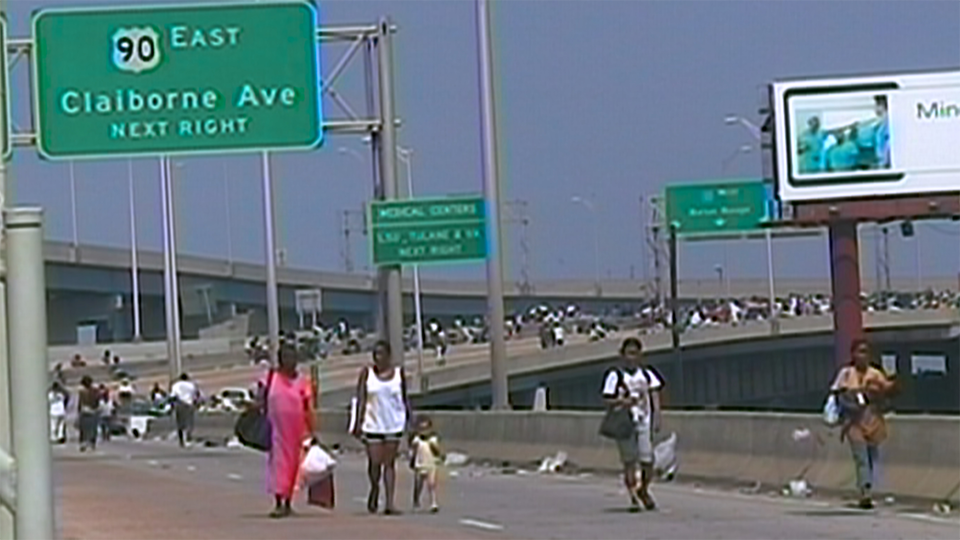
When Hurricane Katrina unleashed a catastrophic flood on New Orleans, it exposed far more than the vulnerabilities in the city's faulty levee system. Told through emotional moment-to-moment accounts of survivors and through riveting and immersive archival footage - some of it never before seen - this five-part premium series reveals Katrina as a disaster that was anything but natural.
Archival highlights
The central aim of our series Hurricane Katrina: Race Against Time was to offer viewers an authentic and immersive window into the experiences of those affected by the hurricane as we heard their stories. The production team and Supervising Archival Producer Julieann Galdames knew what would distinguish our project from others was the inclusion of personal archive - footage captured by people who were directly experiencing the unimaginable tragedy and challenges of the storm. Each team member knew how important it was to cultivate relationships with these individuals, build trust in our archival and research process, and ensure we would honor their experiences during Hurricane Katrina.
Julieann was charged with finding archival material that vitally supported the stories our contributors shared with us of their lives in New Orleans before Hurricane Katrina, their struggles and survival during the flooding of their beloved city, and how their lives and the city itself changed in the years since. Those narrative needs were supported across the series authentically through the footage Julieann and her team tracked down.
Among the many moments in the series where this is evidenced is when modern day interviews with contributors are juxtaposed with archival footage of them in 2005:
New Orleanian Kevin Goodman standing outside the Convention Center with his grandbabies in his arms pleading for help
Former U.S. Coast Guard service member Sara Faulkner suspended by a helicopter cable rescuing residents from roofs and balconies
Community organizer Malik Rahim near his home talking about vigilantes with long-guns
From the outset, Julieann methodically mapped out how she would go about finding such material over the two- and half-year production cycle. She knew that speaking first with the local-to-New Orleans residents, filmmakers, film festivals and schools would garner the best found footage. She and her team combed through local newspaper articles to find additional potential contributors and licensors. Julieann made countless calls and had long conversations with people, building direct relationships and vouching for the honesty and integrity the entire team had in their commitment to tell these stories.
Julieann’s thorough canvassing of the New Orleans community also created a network of individuals who would then introduce her to other contacts within the community. On more than one occasion Julieann would help residents rediscover photos and footage they had forgotten they even had in their possession.
Julieann contacted first responders at the local and federal levels to track down footage. She lastly widened her scope eventually to large news organizations and national archive licensors whom she knew had material much of the public had seen before, but that could be given new and additional context by the creative team.
Julieann worked closely with the production and post editing team to ingest and track all the archival footage and stills she and her team found. Due to her meticulous nature, Julieann could identify each piece of footage and confirm respective copyright and ownership rights. This was crucial during the multiple rounds of cuts of each episode which would then be reviewed by Julieann and documented before undergoing production and legal review. Julieann would then capably answer any questions needed during the legal review. Julieann worked tirelessly with licensors, negotiating competitive rates and bulk buys to remain within the approved archival budget. She concisely reported back to the production and creative teams of any challenges in clearing footage and finding comparable archive when needed.
After picture lock of each episode, Julieann efficiently worked through the process of hammering out final details on license agreements, obtained high resolution footage for the online prep and turnover to the finishing team, and oversaw the entire final archival documentation process necessary for delivery.
Lightbox knew from working with her on past projects that Julieann was up for the task from research through delivery. The archival scope of Hurricane Katrina: Race Against Time was a huge undertaking. Julieann’s tenacity, relationship building with all creative, production and post team members, in addition to licensors big and small, was true to form and we could not have been happier with the results.
Katharine Waldrum for 'Boyzone: No Matter What'
Production Company:
Curious Films
Synopsis
Boyzone: No Matter What. They were one of the most successful and iconic boybands of all time – but behind-the-scenes, conflict and rivalry, betrayal and tragedy led to their falling apart. Now, thirty years on, all four remaining members - Ronan Keating, Keith Duffy, Shane Lynch and Michael ‘Mikey’ Graham, as well as their estranged manager, Louis Walsh – reveal the truth of what really happened, the extraordinary highs of their meteoric rise to fame, and the huge costs that being in a boyband had on each of them.
Archival highlights
The archive brought challenges, in that it was both extensive in nature but also limited in intimate moments. However, Katharine’s excellence is evident in the way she masterfully interrogated hundreds of hours of archive footage to find those vital emotional moments, with special care taken to make Stephen Gately a present force throughout the narrative. The archive expertly oscillates between light and dark moments, creating a balanced emotional rhythm that honours both the exhilarating highs and devastating lows of the Boyzone journey. Katharine’s outstanding research utilised every contact and technique to find unseen footage and photos which took the series to a new level. The challenge of the vastness of the footage is it often didn’t reflect the truth of what was happening behind the scenes but by negotiating and hunting down the rushes it allowed us to depict more vulnerable moments that were so vital. What resulted was a series that represents documentary filmmaking at its most impactful - entertaining while illuminating universal human experiences. It transforms a pop culture narrative into a profound meditation on friendship, identity, loss, and resilience.
Nessa Dundon for 'The Hunt for Peter Tobin'
Production Company:
Firecrest Films
Synopsis
On a snowy night in 1991, 15-year-old Vicky Hamilton fails to return home, prompting one of Scotland’s largest missing persons investigations. Posters appear nationwide, but no trace is found. In a new interview, her sister Lindsay recalls the strain on their family. Several days later, Vicky’s purse is discovered near an Edinburgh bus station.
That summer, 18-year-old Dinah McNicol disappears while hitchhiking home from a music festival in Kent. As the early 90s mark a shift in how such cases are handled, her father turns to the newly formed National Missing Persons Helpline, while media coverage on programmes including Crimewatch brings wider attention.
More than 15 years later, in 2006, 23-year-old Angelika Kluk vanishes in Glasgow. The Polish student is later found murdered beneath church floorboards where she had been working. Police trace church handyman Patrick McLaughlin, revealed to be fugitive sex offender Peter Tobin. His arrest raises the chilling possibility that a serial killer had operated across the UK for decades.
Across two episodes, the documentary examines the disappearances of three young women and their lasting impact, featuring archive footage and interviews with families, detectives and forensic experts.
Archival highlights
It’s with the utmost conviction that I nominate Nessa Dundon for her outstanding work as Archive Producer on the award-winning and popular BBC documentary series The Hunt for Peter Tobin.
From the outset, this production faced significant constraints. Our archive budget was severely limited, with strict caps imposed across multiple archive libraries. The editorial ambition of the series, however, was expansive. We needed depth, accuracy, emotional resonance, and visual authority. What we had in resources and schedule was modest; what Nessa delivered was extraordinary. Not only was she working within severe financial parameters across multiple archive libraries, she was doing so at speed as our delivery schedule was typically unrelenting.
Nessa’s understanding of the archive landscape is exceptional. She demonstrated not just familiarity with catalogues, but a forensic comprehension of how collections are structured, cross-referenced, and — crucially — how they can be interrogated beyond surface-level metadata.
Her deep dive into the BBC’s complex, vast and fragmented archive was nothing short of remarkable. Rather than relying on obvious news reports, she explored under-indexed, long-forgotten programming strands. This rigorous search led her to uncover a profoundly significant clip from an episode of the talk show ‘Lowri’. The episode focused on missing people and, by an extraordinary coincidence, featured two families whose loved ones would later be revealed as victims of Peter Tobin — appearing in the same programme 20 years before the bodies were discovered.
This was not just a “find.” It was a moment of genuine documentary power. The clip added emotional gravity and historical poignancy that no reconstruction or retrospective interview could replicate. It embodied the tragic convergence of lives that defines this case. Without Nessa’s depth of knowledge — and her instinct for where to look — this material would have remained buried.
Working within a constrained financial framework requires resilience. Working within it while chasing complex, sensitive material demands tenacity of the highest order.
Many of the news reports from the 1990s that were editorially essential to the series survived only in poor-quality copies. The easy solution would have been to accept degraded versions or compromise on inclusion. Nessa refused to compromise.
She tracked down original broadcast masters and earlier-generation copies wherever they existed. This meant repeated correspondence, persistent negotiation, and patient cross-checking across institutions. It required following faint paper trails and challenging assumptions about what was or wasn’t available.
Tenacity, in Nessa’s case, is not noise or force — it is disciplined persistence. She does not stop when something appears difficult. She finds another route.
The integrity of a crime documentary rests on accuracy. In a story as sensitive as this one, involving multiple victims and grieving families, the margin for error is zero.
Nessa’s approach to verification was meticulous. Every clip was cross-referenced against transmission records. Dates, captions, contextual framing — all were scrutinised. She ensured that what appeared on screen was not just evocative, but correct.
Where multiple versions of material existed, she assessed the provenance and editorial framing of each one. She safeguarded the production from inadvertent misrepresentation. This diligence protected not only the series, but the reputations of the contributors and families who trusted us with their stories.
Her thoroughness extended to financial management. Within tight spending limits across different archive providers, she tracked usage with precision, maximising on-screen value without breaching restrictions. Every second of archive carried weight — creatively and financially — and she treated both with equal seriousness.
Archive producing at its best is not administrative — it is creative. Nessa approached the role as a storyteller. The discovery of the ‘Lowri’ clip is one example of imaginative research thinking. But her creativity extended further. She recognised that degraded archive footage risked distancing contemporary audiences from the emotional immediacy of the events. Rather than accepting technical limitations, she explored the use of AI-driven restoration tools to enhance and clean original copies she had sourced.
Importantly, this enhancement was never cosmetic. It was careful and responsible — improving clarity while preserving authenticity. The result was transformative. Viewers were able to connect with the past in a way that felt immediate and real, rather than archival and remote.
Her imagination lay in understanding that technology could serve truth — not distort it — when used with restraint and integrity.
Above all, Nessa’s work enhanced and protected the integrity of the footage and the film itself. She understood that archive in a documentary about a serial killer must never sensationalise. Context matters. Tone matters. She ensured that material was presented in a way that respected victims and avoided exploitation.
By sourcing higher-quality originals, she prevented the story from feeling tabloid or lurid. By verifying provenance, she ensured accuracy. By navigating rights and budget responsibly, she shielded the production from legal vulnerability. By enhancing footage carefully, she brought clarity without altering meaning.
In a production environment defined by restriction — financial, logistical, and ethical — Nessa Dundon delivered work that was expansive in impact. The Hunt for Peter Tobin went on to win two BAFTA Scotland awards and proved a huge ratings success on both the BBC broadcasts and the iPlayer the series. It would not be the series it is without her.
For these reasons, I wholeheartedly nominate Nessa Dundon for the FOCAL International Awards. She exemplifies the very highest standards of archive research and production.
Sophia Doe for 'Once Upon a Time in Space'
Production Company:
KEO Films
Synopsis
Four-part documentary series telling the human stories behind one of our most extraordinary endeavours: the exploration of space.
Moving beyond scientific achievement, it examines the personal experiences of astronauts, cosmonauts, ground-based participants, and the loved ones left behind. Through powerful testimony and intimate, unseen archive, a complex portrait of humanity emerges: one that lays bare both our fragility and boundless curiosity.
The series traces significant milestones in our spacefaring history, from the birth of the Shuttle and the pioneering Space Station Mir to the rise of commercial spaceflight and impact of the Ukraine War.
The lens points upward, yet the story keeps returning to Earth. Accounts of bravery, friendship and tragedy are told against the backdrop of a rapidly changing world, connecting technical and geopolitical developments to lived experience.
Humankind’s journey into space began 70 years ago as a competition between opposing world views: capitalism and communism. It has evolved into a collaborative and unifying endeavour, culminating in the creation of the International Space Station.
Now, as a new space race dawns on a world once again buckling with division, it is those pioneers who have already ventured into the void who hold the wisdom to help guide us forward.
Archival highlights
Space is huge, and so is the NASA archive! But you quickly realise that a lot of US footage feels corporate – it’s the same shots of training and take-off repeated over decades. Finding compelling material round the edges from the 100’s of hours of people floating in space eating M+M’s was a huge task. Many archive producers would be daunted by the scale of the challenge, but Sophia approached it with imagination, vigour and tenacity. She was always positive, worked incredibly hard and her organisation of the material meant she always stayed a few steps ahead of the edits. She was on top of it all – from the personal to the wonders of space as well as the political and cultural context of the last 60 years.
Sophia also took on the near-impossible task of penetrating the world of Russian space archive. Sanctions prevented her from dealing directly with many Russian archives, including the Russian Space Agency, Roscosmos. Instead, she identified and cultivated alternative routes, most crucially trawling 1000s of sparsely logged entries within NASA's tape log, finding a trove of invaluable Russian tapes only accessible due to her strong relationship with NASA. And that made it possible to tell the Russian story. Without that there would be no series.
Every editor works differently, some work with IV first and so needed someone who can see where the story is going and get ahead, some want to see archive for each story before building their sequences. Managing the demands of four different edits and four ways of working was something Sophia excelled at.
With Once Upon a Time in Space, we were looking for personal stories that ran parallel to the history of space exploration. It works best when these stories intersect with global events, whether that be issues of race or international politics. Usually, the big picture stuff is in the background, putting a particular demand on the archive. Sometimes the brief was in retrospect ridiculous – can you find a clip to summarise the relationship between Russia and the US in the mid 80’s? The choices Sophia made were clear, original and helped to shape the series.
With no narration the series required extensive US news reporter sync as contextual scaffolding. Sophia worked with all four editors to review sync early to identify problematic cuts which could be rejected. For any denials she calmly proposed solutions during a tight post schedule with increasing demands on her time.
We were trying to make space exploration small and intimate by prioritising the storyteller, the person in the chair and that meant looking for the personal and the unusual. We wanted to avoid the cliched sequences of rocket launches, technological explanations and mission control gobbledegook. None of it would have been possible without Sophia’s understanding of the ambition, her commitment and patience and eye for detail. A lot of this story is well known, and Sophia was vital in our attempt to tell it in a new way.
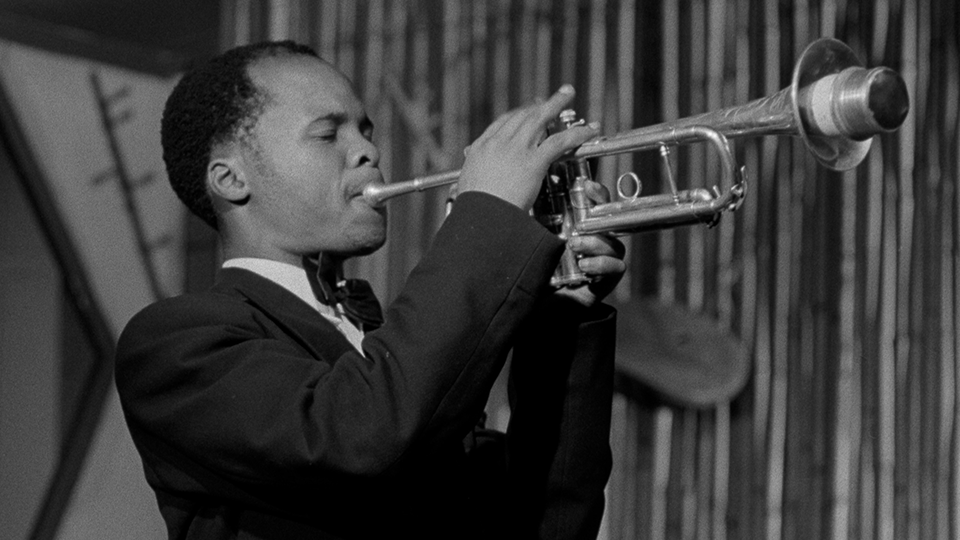
African Jim (also known as Jim Comes to Jo'burg)
Production Company:
R3store Studios
Synopsis
Originally released in 1949, Jim Comes to Jo’burg-also known as African Jim-was the first feature-length entertainment film made with a black cast and specifically for black audiences in South Africa. It marked the screen debut of the legendary Dolly Rathebe and was directed by Donald Swanson, whose early works helped center Black identity and experience in a deeply segregated era of film.
The 50-minute drama follows Jim, a young man who leaves his tribal homeland for the city of Johannesburg in search of a better life. What unfolds is a mix of hardship, music, and resilience, all set against the vibrant but dangerous city nightlife.
At R3store Studios, we completed a full 4K scan, grade, and full restoration of the film from the original 35mm print - bringing it back to life since its original release!
Archival highlights
Made in 1949, arising from the challenging times of early apartheid, African Jim is a full-length feature musical that tells the tale of a man’s journey from his rural village to the big city of Johannesburg. Upon arrival, he loses the address of relatives he was to visit, is tricked, and then mugged by gangsters. His luck changes when he meets a friendly night-watchman who takes him in. He eventually meets the watchman’s daughter, a talented singer at the Ngoma night club. She gets him a job at the club, where they sing together and are discovered by a recording studio.
The film has only previously been available in a poor quality SD version, this is the first time it has been scanned and restored in 4K and made available to the public for the first time since its initial release. Villon Films and Alex Wilson the Archive Producer on the project approached us to work on this very important project on behalf of them and for the museum.
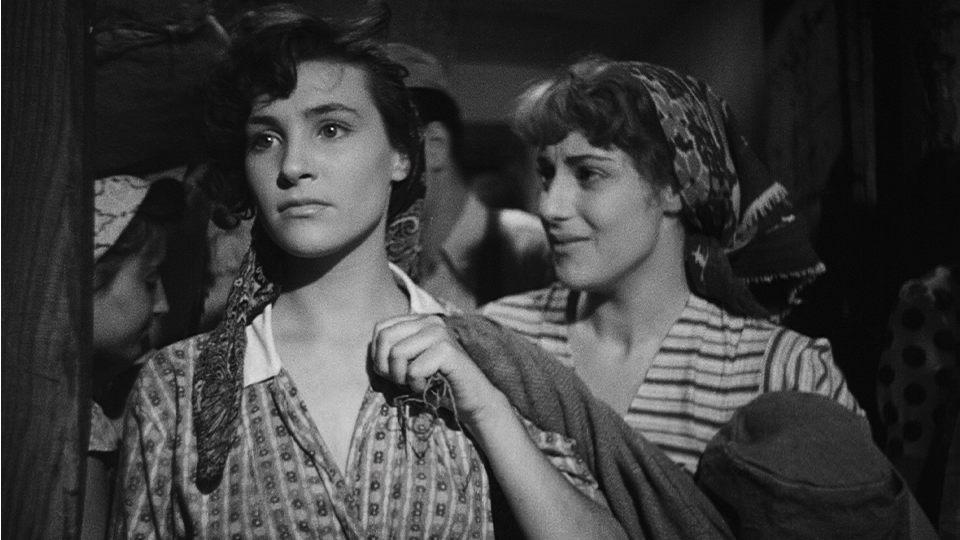
Riso Amaro
Production Company:
Cineteca di Bologna
Synopsis
An ambiguous affiliation to the neorealist movement. To give the whole thing a sense of unity, Giuseppe De Santis resorts to torrid eroticism, making use of the unusual gathering of women at work and the personal seductiveness of Silvana Mangano. The mediocrity of the police element of the plot does not prevent the filmmaker from showing the small universe he describes from a wide variety of angles and, at the same time, from making its collective spirit felt, capturing its enthusiasm and disappointments as the manifestations of a homogeneous group. He astutely uses long shots, crane shots in outdoor scenes and choruses sung by women in the rice fields. The main characters (with the exception of the “villain” incarnated by Vittorio Gassman – a conventional and histrionic figure completely out of place in a neorealist context) express the ambivalence of the postwar generation. On one hand, there are their temptations, their frustrations and their tragic consequences; on the other, there are efforts to break out of the rut and recreate a new world. This leads to entirely atypical fight scenes, where the two men remain motionless and passive, while the two women, armed and ready to take action.
Archival highlights
The 4K restoration of Riso Amaro (Giuseppe De Santis, 1949) was carried out by the Fondazione Cineteca di Bologna, in collaboration with Cristaldifilm, using the best available elements preserved at the Cineteca Nazionale. The original camera negative, incomplete and missing 7 of its 14 reels due to severe chemical deterioration, was supplemented with a lavender print held by the Cineteca Nazionale and produced in 1994. Some shots that had been duplicated in the lavender element were replaced with the corresponding shots taken from an earlier-generation vintage positive, in order to improve overall image quality. The same positive and an additional combined duplicate negative were also used to fill further gaps in both image and sound. Cinematographer Luca Bigazzi supervised the restoration work. The work was carried out at the L’Immagine Ritrovata laboratory.
Sterne by Konrad Wolf, 1959
Production Company:
L'Immagine Ritrovata Group / DEFA Stiftung
Synopsis
Inspired by the recollections of Bulgarian screenwriter Angel Wagenstein, Sterne, set in 1943, tells the tragic love story of Ruth (Sascha Kruscharska), an imprisoned Greek Jewish teacher, and Walter (Jürgen Frohriep), a German sergeant posted in a Bulgarian transit camp. Behind barbed wire, a fragile connection blossoms between them, borne of thwarted hopes and dreams shattered by the Nazi machine. By staging the story of this brief affair in a camp before deportation to Auschwitz, Konrad Wolf reminds us with sensitivity that love, however fleeting, will always be an act of resistance in the face of the unspeakable.
Archival highlights
This project, through the 4K digitization and restoration, aims to return one of Konrad Wolf’s most important works to its original splendor. Sterne is the first film by a German director to address the deportation of Jews to the Auschwitz extermination camp. The outstanding work of cameraman Werner Bergmann, who shot almost all of Wolf ’s films, deserves special mention. Together with Wolf and set designer Alfred Hirschmeier, he drafted a visual script for the first time. Each shot was planned in detail beforehand, which turned many images into symbols. Sterne is one of the most important anti-fascist films of the DEFA, which deals with the guilt and responsibility of the Germans in the Holocaust and it was shot in co-production with Bulgaria in the area around Sofia. It received a special jury prize at the Cannes Film Festival, however, due to West Germany’s claim to sole representation, the film was billed as an exclusively Bulgarian production and the involvement of DEFA was suppressed. Given its significant historical and social importance, the restoration of this film will allow it to be seen and appreciated by a new generation of viewers.
The First Aerial Journey Across Europe
Production Company:
GP archives
Synopsis
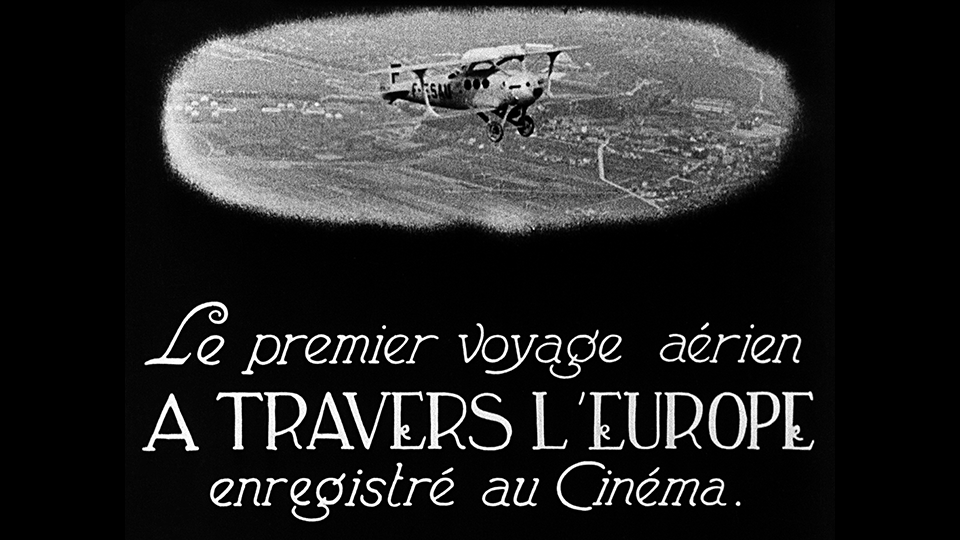
‘The First Aerial Journey Across Europe’ invites viewers to embark on a 90-minute journey aboard two airplanes making the first ever filmed air raid across Central Europe. Alternating between aerial and ground shots, the director and cameraman fly over ten countries and reveal striking landscapes still deeply marked by the traces of the First World War. A technical feat of its time, this documentary produced by Gaumont in 1922 bears witness to the first commercial air flights in Europe.
Long forgotten, ‘The First Aerial Journey Across Europe’ has never been re-released by Gaumont since its première in theaters in 1923.
This first feature-length documentary, restored by GP Archives, is based on the original 35mm nitrate negatives that had been preserved until then, but were scattered and edited in disorder. This restoration therefore faced a double challenge:
to reconstruct a film for which there was no narrative thread and very few intertitles.
to carry out 4K digitization and complete digital restoration of all the material. This restoration work was based on constant reflection to ensure a faithful reproduction of the original work, although some questions remain unanswered and are still under investigation.
The German Retreat and Battle of Arras
Production Company:
IWM (Imperial War Museums)
Synopsis
The restoration of Battle of Arras (1917), completes IWM’s thirty-year project to digitally restore the Big Battle Films (Battle of the Somme, Battle of the Ancre); a groundbreaking trilogy of factual films that raised the status of film in Britain, leading to the first film archive at IWM and the recognition of archive footage as a key element in films about the past.
IWM’s aim was to create accessible versions, appreciated by general audiences, but that reflected current technical and ethical practices for film restoration. For ‘Arras’, this meant a version that was faithful to the distribution prints screened in 1917. Along with the usual defects and damage typical of films preserved from this era, ‘Arras’ brought its own challenges for the restorers – poor documentation, evidence of editing in the archives, and the existence of coloured shots and titles that were incomplete and fading. IWM overcame these challenges with experience gained from the ‘Somme’ and ‘Ancre’, an ethical framework, and innovation in restoration practise, such as the adoption of Cineteca di Bologna’s Edit Decision List, the Flueckiger method to recreate the coloured sequences, and a collaborative and dynamic partnership between IWM and the digital restoration team at the University of Udine, that benefitted the restoration process.
Archival highlights
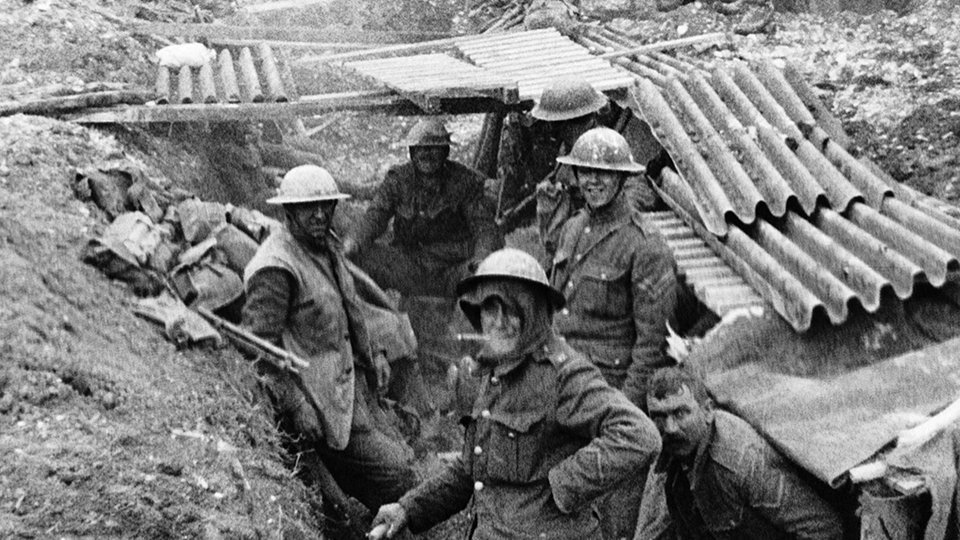
Battle of Arras was sponsored by the War Office Cinematograph Committee and produced by the Topical Film Company. It was filmed by four documentary and newsreel cameramen, who were employed, billeted, and fed by the Army. They wore the official uniform issued to the press. The cameramen filmed from the opening of Battle of Arras (8/9 April 1917) until the 19th May but also recorded preparatory action in January and March 1917. There are no records about the production of the film and, other than the cameramen, we do not know who made it; the only other named person is William F. Jury, the Booking Director. Our research suggests the production followed the pattern of Battle of the Somme and Battle of the Ancre: the cameramen bringing back the exposed footage and their notes of what they filmed to London, where it was edited by an unnamed producer, assisted by one or more of the cameramen, with Captain Faunthorpe from military intelligence writing the titles. Once the footage was edited a rough cut was screened to War Office officials and then sent to Army Headquarters in France for more scrutiny and censorship. Any cuts identified by the Chief Censor were made back in London. The film was trade shown on 6th June 1917 and premiered on 25th June.
IWM’s restoration of the 16 coloured shots and red intertitles marks a revival of the original nature of the film - no coloured version has been available since the tinted nitrate print was withdrawn from use before the Second World War. The general restoration work to make the film complete, to repair damage and rectify defects has greatly improved the viewing experience. This is the most complete and 'viewable' version since 1917; expert viewers and critics have even remarked on its beauty.
Big Star: The Nick Skelton Story
Director:
Sarah George
Producer(s):
Sarah George / Chris Uettwiller / Debbie Burrows / Martin Desmond Roe / Nick Frew
Footage Archive Researcher:
Kyle Jackson
Footage Archive Producer:
Archival Ninjas / Meghan Geier / Kaelin McDonald
Archival Sources:
BBC / BBC Sport / USOPC / Spruce Meadows / FEI / Equestrian Vision
Production Company:
Debsdocs Productions / Dirty Robber
Country of Production:
United States
Original Release:
2025
Synopsis
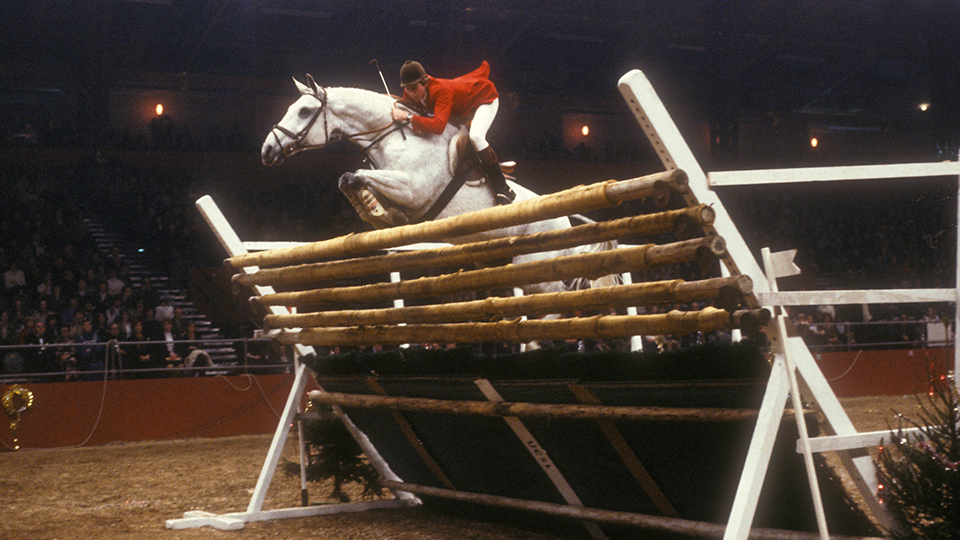
Crashing into the British showjumping scene during the heyday of the sport in the 1970s, Nick Skelton dominates the competition until he breaks his neck in an unlucky fall. Doctors tell him to quit riding, but he makes an against-all-odds comeback. When his genius horse, Big Star, suffers what appears to be a career-ending injury Nick refuses to give up his trusted partner. Together they pursue his elusive dream of winning an individual gold medal at the Rio Olympic Games.
Diamond Diplomacy
Director:
Yuriko Gamo Romer
Producer(s):
Yuriko Gamo Romer / Marc Smolowitz / Loi Ameera Almeron
Footage Archive Researcher:
Yuriko Romer / Ken Schneider / Loi Ameera Almeron / Michaelle McGaraghan
Footage Archive Producer:
Megumi Nishikura
Archival Sources:
Major League Baseball / Getty Images / Nisei Baseball Research Project / National Archives / Con Dempsey Collection, courtesy of Dave Dempsey
Production Company:
Flying Carp Productions
Country of Production:
United States
Original Release:
2025
Synopsis
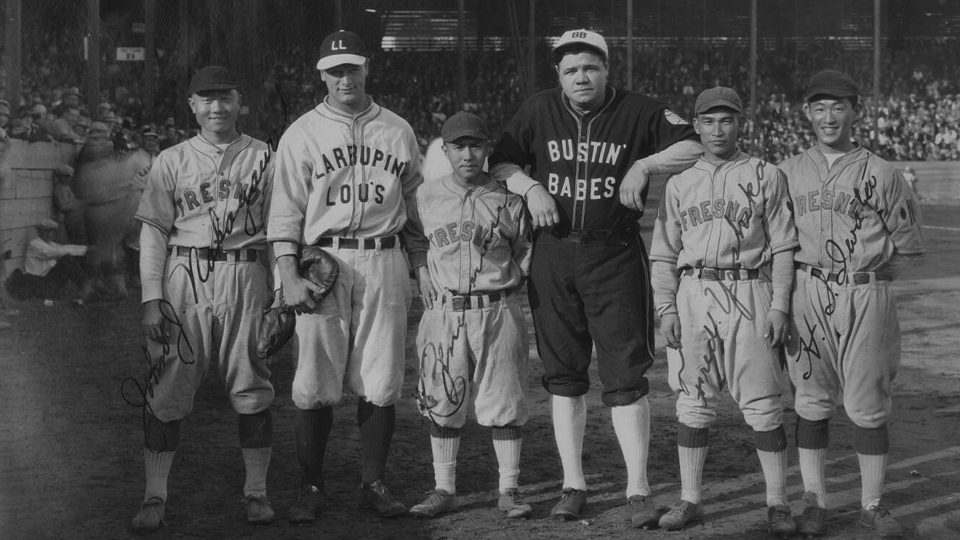
Diamond Diplomacy traces the long, complex relationship between Japan and the United States through their shared passion for baseball, from 1872 to today. The film opens with American and Japanese children preparing for games, followed by a montage of baseball cards and Babe Ruth thrilling Japanese fans with a home run. 153 years of baseball becomes a cultural bridge between the two nations despite tensions rooted in isolationism, racism, war, and shifting global politics.
Introduced during the Meiji period by Horace Wilson, baseball quickly takes hold in Japan. Babe Ruth’s 1934 tour further ignites enthusiasm and softens anti-American sentiment. During World War II, while Japanese Americans are unjustly incarcerated, Kenichi Zenimura builds a baseball field in the Gila River camp, keeping the sport alive behind barbed wire. After the war, General Douglas MacArthur brings the San Francisco Seals to Japan to help repair relations.
1964, Masanori Murakami becomes the first Japanese Major Leaguer, but it is short-lived due to contractual disputes and exchanges halt until 1995, when Hideo Nomo’s signing with the Dodgers reopens the pipeline for stars like Hideki Matsui, Ichiro Suzuki, and Shohei Ohtani. Blending history and personal stories, Diamond Diplomacy shows how baseball fosters connection across cultures.
Diamond Diplomacy
Director:
Yuriko Gamo Romer
Producer(s):
Yuriko Gamo Romer / Marc Smolowitz / Loi Ameera Almeron
Footage Archive Researcher:
Yuriko Romer / Ken Schneider / Loi Ameera Almeron / Michaelle McGaraghan
Footage Archive Producer:
Megumi Nishikura
Archival Sources:
Major League Baseball / Getty Images / Nisei Baseball Research Project / National Archives / Con Dempsey Collection, courtesy of Dave Dempsey
Production Company:
Flying Carp Productions
Country of Production:
United States
Original Release:
2025
Synopsis
Diamond Diplomacy traces the long, complex relationship between Japan and the United States through their shared passion for baseball, from 1872 to today. The film opens with American and Japanese children preparing for games, followed by a montage of baseball cards and Babe Ruth thrilling Japanese fans with a home run. 153 years of baseball becomes a cultural bridge between the two nations despite tensions rooted in isolationism, racism, war, and shifting global politics.
Introduced during the Meiji period by Horace Wilson, baseball quickly takes hold in Japan. Babe Ruth’s 1934 tour further ignites enthusiasm and softens anti-American sentiment. During World War II, while Japanese Americans are unjustly incarcerated, Kenichi Zenimura builds a baseball field in the Gila River camp, keeping the sport alive behind barbed wire. After the war, General Douglas MacArthur brings the San Francisco Seals to Japan to help repair relations.
1964, Masanori Murakami becomes the first Japanese Major Leaguer, but it is short-lived due to contractual disputes and exchanges halt until 1995, when Hideo Nomo’s signing with the Dodgers reopens the pipeline for stars like Hideki Matsui, Ichiro Suzuki, and Shohei Ohtani. Blending history and personal stories, Diamond Diplomacy shows how baseball fosters connection across cultures.
Iománaíocht Hollywood (Hollywood Hurling)
Director:
Mac Dara Ó Curraidhín
Producer(s):
Mac Dara Ó Curraidhín / Seán Crosson
Footage Archive Producer:
Mac Dara Ó Curraidhín / Seán Crosson
Archival Sources:
Irish Film Archive / Warner Bros / RTÉ / ITV Source / Paramount
Production Company:
Léirithe le Mac Dara Ó Curraidhín
Country of Production:
Ireland
Original Release:
2025
Synopsis
This captivating two-part series for TG4 provides a unique insight into the cinematic portrayal of Ireland and indigenous Gaelic games from the early 1900s to the present. It explores the evolution of Irish identity on screen, from major Hollywood productions—including the seminal work of John Ford—to the birth of a distinct indigenous film culture.
The series has earned high praise from national critics, with The Irish Times noting it as a "fascinating and deep dive" into the archives, while the Irish Independent hailed it as a "superb" exploration of how the GAA helped define the nation’s "reel image."
Produced by Léirithe le Mac Dara Ó Curraidhín and funded by Coimisiún na Meán and TG4, the series is based on Seán Crosson’s award-winning book, Gaelic Games on Film. It features stunning archival footage alongside insights from leading figures like Professors Paul Rouse and Gearóid Ó Tuathaigh, and filmmaker Bob Quinn. Dedicated to the late Dublin GAA legend Jimmy Gray, the series offers an evocative perspective on how Ireland’s national games fueled the development of its national cinema, serving as a vital record of the intersection between sport, culture, and the moving image.
Nothing But a Winner: The Alabama Football Story
Director:
Jimmy Jenkins
Producer(s):
David Jacobson / Caleb Castille / Breona Humphrey
Footage Archive Producer:
Archival Ninjas / Jennifer Grace Cook / Marc Rosenzweig / Meghan Geier
Archival Sources:
Catapult Sports / Alabama Department of History and Archives / Getty Images / Pond5 / Alamy
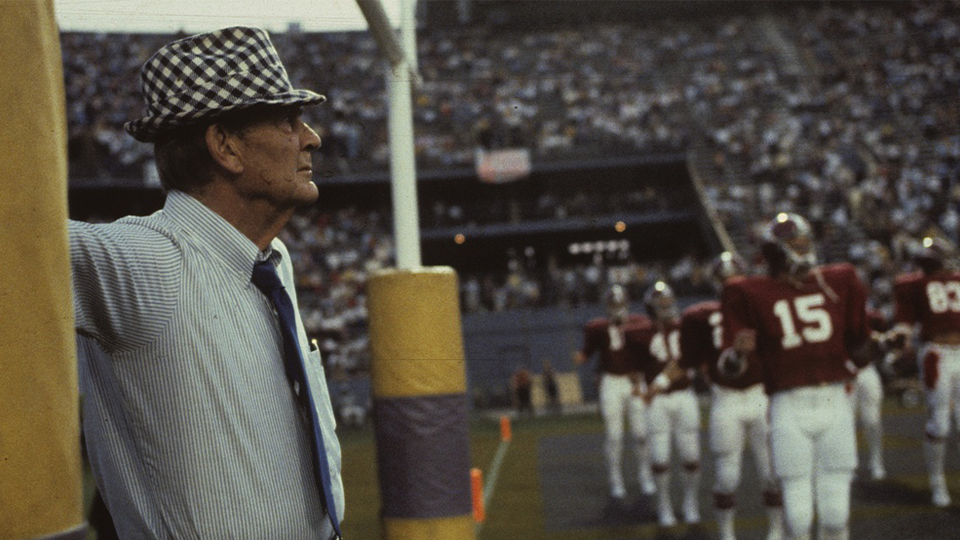
Told by the barrier-breaking players from National Championship teams spanning five decades, Nothing But A Winner chronicles the true story of the greatest college football program of all time, showcasing how the legendary process of Coaches Bear Bryant and Nick Saban created the University of Alabama’s dominant culture of winning.
Unforgotten: The Bradford City Fire
Director:
Andy R. Worboys
Producer(s):
George Grafton
Footage Archive Producer:
Miriam Walsh
Archival Sources:
SWpix / Barry Wilkinson / BBC Archives / Guzelian Ltd / Yorkshire Film Archive / Bradford Telegraph and Argus
Production Company:
ACME
Country of Production:
United Kingdom
Original Release:
2025
Synopsis
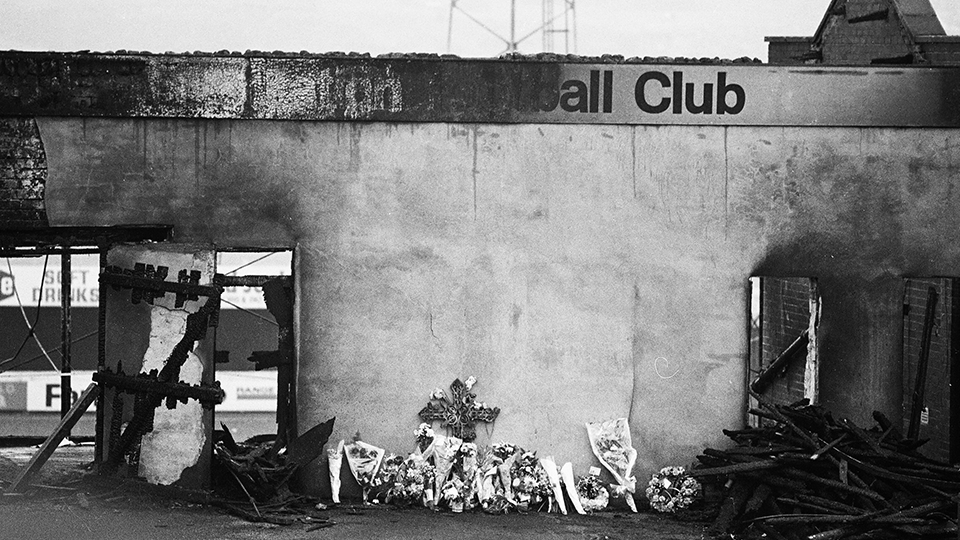
When Bradford City met Lincoln City in May 1985 for the final game of the season, everyone remembers the carnival atmosphere as the city celebrated a dramatic comeback, with one of its best seasons ever. With Bradford’s spot at the top of the league secure, promotion was in the bag.
But what happened at the end of a goal-less first half was the stuff of nightmares. A fire, believed to have been started by a discarded cigarette or match, engulfed one of the old wooden stands and 56 lives were lost in one of the worst disasters in footballing history.
And then, over the next four decades, the story of one of the world’s biggest ever sporting disasters faded quietly away.
Marking the 40th anniversary of the event, that story is remembered and its victims and survivors commemorated in this powerful record of a forgotten tragedy. Combining extraordinary access to survivors, the bereaved, emergency services and unseen archive, this film is a celebration of community, resilience and collective memory through the stories of those who experienced the tragedy, and those who were called upon to deal with the aftermath.
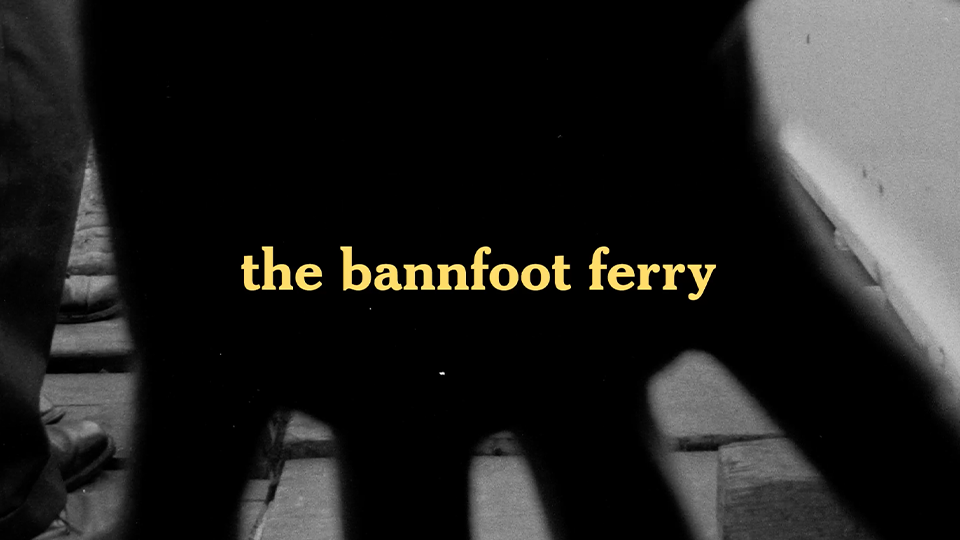
The Bannfoot Ferry
Director:
Colm Laverty
Producer(s):
Will McConnell
Footage Archive Producer:
Colm Laverty
Archival Sources:
Ulster Television
Production Company:
UTV / Northern Ireland Screen
Country of Production:
United Kingdom
Original Release:
2025
Synopsis
Colm Laverty's short documentary "The Bannfoot Ferry" brings to light a forgotten piece of Northern Ireland's television heritage. Drawing on extensive materials from Northern Ireland Screen's Digital Film Archive, this documentary examines the early years of an independent TV station and how it shaped society in Ulster.
The film focuses on "Boatman, Do Not Tarry," a 1967 UTV production filmed near Laverty's hometown of Maghery on Lough Neagh's shore. This groundbreaking drama was the first locally-made television production ever broadcast on the ITV network. What makes "Boatman" particularly notable is its scale, creative vision and how it foreshadowed many of the political and social conflicts that would emerge during The Troubles, which erupted just months after the show aired.
Though "Boatman" represented a landmark achievement in early regional television and featured some of Ulster's most talented performers, the drama has largely disappeared from public memory, barely seen in over half a century.
Through a creative blend of archive footage and conversations with locals, archivists, and historians, the documentary reveals striking connections between the world portrayed in "Boatman" and the issues facing Northern Ireland today.
Free As A Bird: A Song Reborn
Director:
Oliver Murray
Producer(s):
Jonathan Clyde / Sophie Hilton / Celia Moore
Footage Archive Researcher:
Chris Purkiss
Photo Archive Researcher:
Dorcas Lynn
Archival Sources:
Apple Corps Ltd
Production Company:
Apple Corps Ltd
Country of Production:
United Kingdom
Original Release:
2025
Synopsis
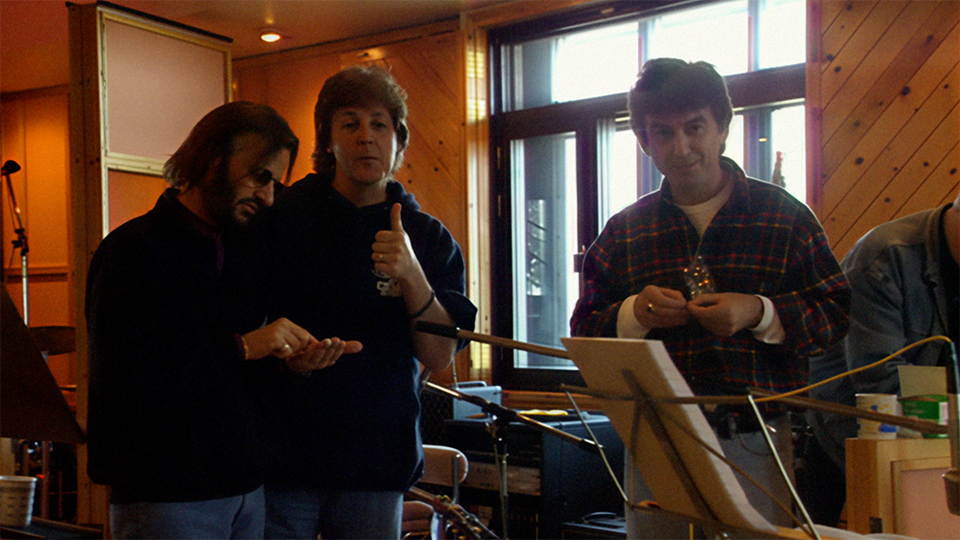
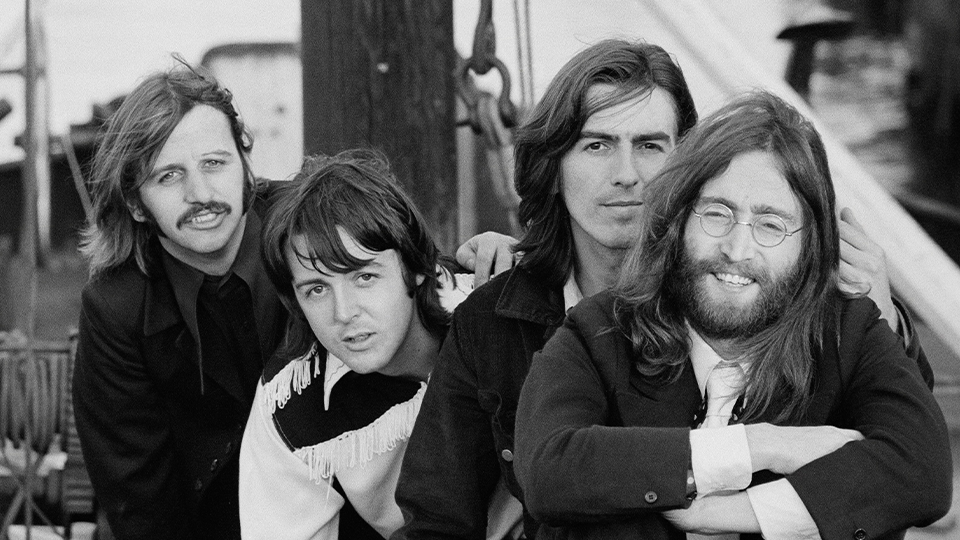
Celebrating the making of a modern Beatles classic and the return of The Beatles Anthology, “A Song Reborn” reveals the extraordinary 1994 reunion of Paul, George and Ringo, 24 years after The Beatles parted ways. A true collaboration became possible when Yoko Ono handed them an unfinished John Lennon composition. Crafted from never-before-seen studio footage shot by the band themselves, this short film captures the three Beatles rediscovering their bond as they shape John’s song into the GRAMMY-winning “Free As A Bird.”
Ghosts
Director:
Katia Lom
Producer(s):
Katia Lom
Footage Archive Producer:
Katia Lom
Archival Sources:
National Archives and Rercords Administration (NARA) / United States Holocaust Memorial Museum
Country of Production:
United Kingdom
Original Release:
2025
Synopsis
Memories are with us. They stand as objects from the past holding us in the moment. We are unable to escape them despite the passing of time. As we attempt to elude history our memories always return and exist as truths in the now.
The English poet Laurence Binyon poignantly evoked about the fallen of WWI: “Age shall not weary them, nor the years condemn…We will remember them.” These words are today often used to pay tribute to the casualties of war, and in this vain Ghosts seeks to bring back the lives lost to armed conflict to remember them.
Using a combination of footage shot with an actor on 16mm and original historical 16mm and 35mm archive reels, the film looks to blur the lines between past and present. We may choose to look away from the truth, but the facts will always stand still before us. They are there holding our gaze to account.
Song of My City
Director:
David C. Roberts
Producer(s):
David C. Roberts
Footage Archive Researcher:
Jeremy Fisher
Footage Archive Producer:
John Sears
Archival Sources:
Extracted from commercially released feature films and documentaries shot on location in New York City, primarily from the 1970s, sourced from legally obtained home media and broadcast materials. Footage drawn from multiple rights-holders and studio
Production Company:
Erddigo
Country of Production:
United States
Original Release:
2025
Synopsis
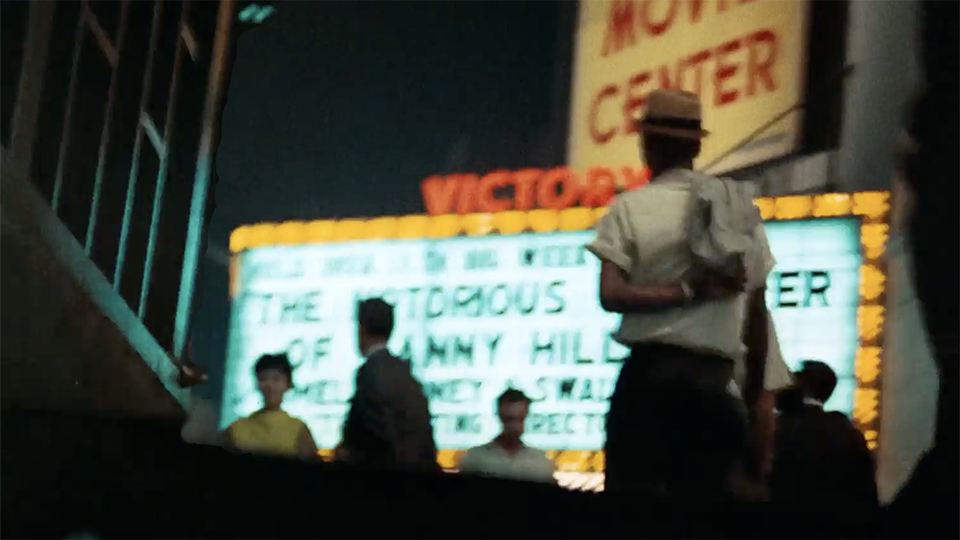
A portrait of 1970s New York, pieced together from 40 movies that mythologized it. Built from the B-roll of these films, this city symphony summons the NY the filmmaker first knew only on screen.
Film Atlas
Editor(s):
James Layton
Footage Archive Producer:
Margaux Chalançon
Founder:
James Layton
Project Coordinator:
Crystal Kui
Archival Sources:
George Eastman Museum / Natural History Museum of Los Angeles County / Cinémathèque française / National Science and Media Museum (Bradford, UK) / Academy of Motion Picture Arts and Sciences
Production Company:
International Federation of Film Archives (FIAF) / George Eastman Museum
Country of Production:
Belgium / United States
Original Release:
2025
Synopsis
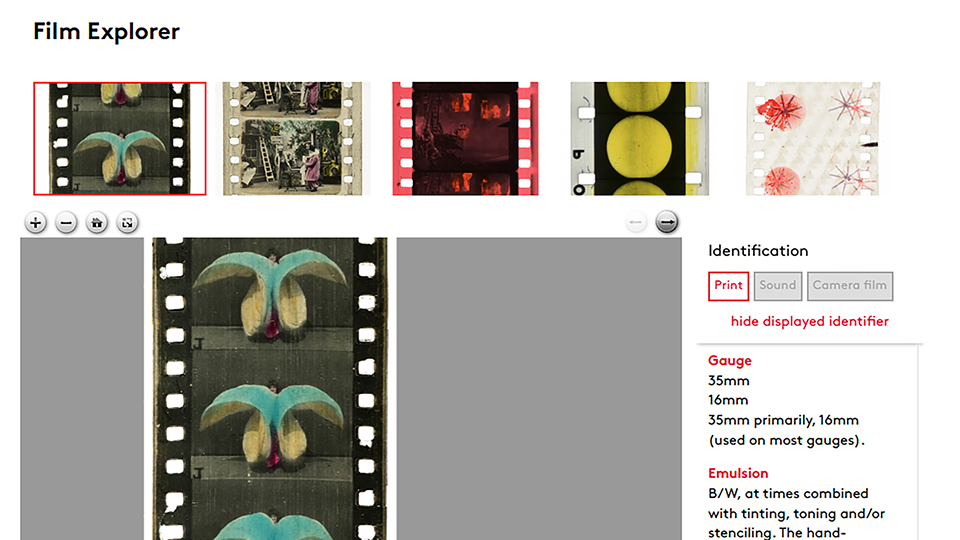
An encyclopedic online resource pairing high-resolution imagery and archival footage with scholarly essays to document the history of film as a physical medium from the dawn of cinema to the present. Facilitated by collaboration between international archives, this dynamic reference, research and teaching tool offers a comprehensive visual guide to every motion picture film format, soundtrack, 3-D system and color process ever invented.
Memories and Dementia – Starting the Conversation
Director:
Rebecca Sandiford / Megan Smith
Producer(s):
Rebecca Sandiford / Megan Smith
Footage Archive Producer:
Victoria Coker (BBC iPlayer) / Lee Butterley (BBC iPlayer) / Carmel Gallagher (BBC Sounds) / Lily Graham (BBC Sounds) / Michael Cosgrave (BBC Archive)
Archival Sources:
BBC Archive
Production Company:
BBC
Country of Production:
United Kingdom
Original Release:
2025
Synopsis
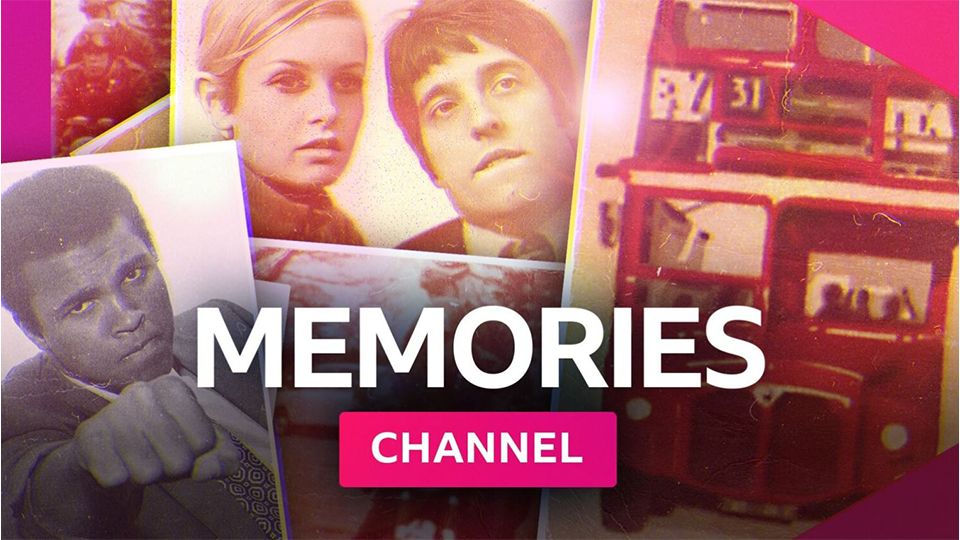
Memories and Dementia: Starting the Conversation was a digital first BBC season that transformed the BBC Archive into an innovative, user centred tool for wellbeing, directly aligning with FOCAL’s focus on innovative platforms and new forms of archive engagement. Premiering online across BBC iPlayer and BBC Sounds, the project reimagined archival content outside traditional broadcast contexts and introduced personalised access routes tailored to people living with dementia.
At its core was the BBC iPlayer pop up channel, Memories, streaming 24/7 and a series of iPlayer curations presenting three decade based collections from the BBC Archive. Curated by era (1960s, 70s, 80s) to reflect audiences’ lived experience, this approach demonstrated innovative archive personalisation, matching users with content from the decade most likely to trigger recognition and reminiscence.
On BBC Sounds, the archive experience expanded through dementia focused collections and themed playlists using archival audio and period defining music to spark memory and support intergenerational conversation.
Developed with leading dementia organisations including Alzheimer’s Society and amplified across BBC television, national radio and local radio, the season brought new audiences to archival content, demonstrating how heritage footage can be redeployed in innovative digital environments to create meaningful social impact.
Memory Bank: Bradford
Director:
Graham Relton / Megan McCooley
Producer(s):
Andy Burns / Ruth Patman
Footage Archive Producer:
Ruth Patman
Archival Sources:
The Yorkshire Film Archive collection
Production Company:
Yorkshire Film Archive at York St John University
Country of Production:
United Kingdom
Original Release:
2025
Synopsis
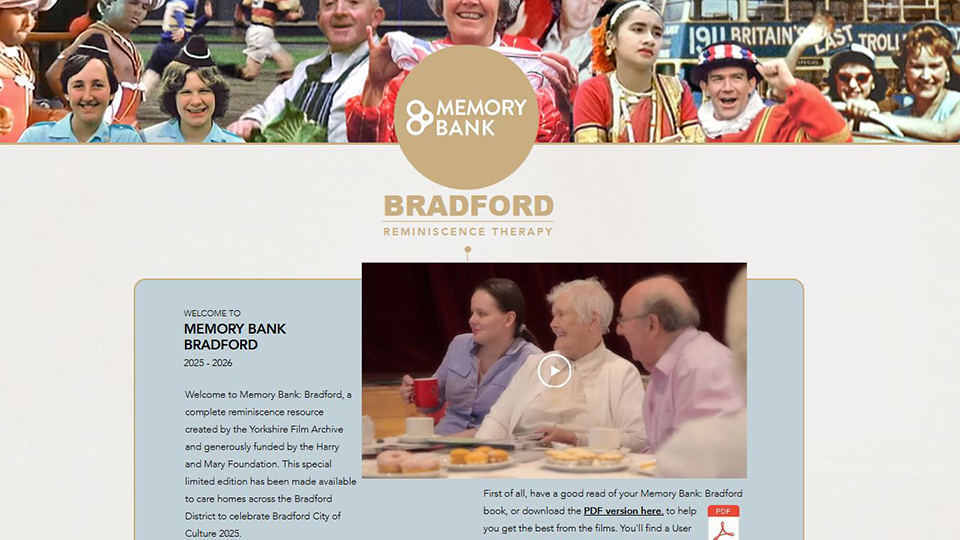
Memory Bank: Bradford is a complete reminiscence resource using simplicity as a force for innovation, curated for older, underrepresented audiences, including people living with dementia.
Designed for use by care workers across Bradford, the platform comprises a website, conceived with ease of use at its core, plus accompanying user guide. Innovative curation and strong supporting material, enhancing and enriching the footage, are central to its success.
Its nine carefully chosen and curated archive films are brought alive and enhanced by a wealth of information, contained in the user guide (also available to download), including ‘Life and Times’, a vivid snapshot of Bradford through the decades, and thoughtfully crafted film notes designed to spark meaningful conversations during reminiscence sessions.
At specially selected points in each film, Memory Bank’s signature key symbol appears on screen, highlighting interesting discussion topics, enabling audiences to connect the past with the present, rediscover memories, and share stories.
The resource builds on the Archive's original Memory Bank project, delivered on DVD to meet the needs of earlier focus groups. Adapting to technological changes in the care sector, especially those driven by the COVID-19 pandemic, Memory Bank: Bradford now provides a hybrid mix of online and physical resources.
The Beatles: Anthology
Director:
Oliver Murray
Producer(s):
Paul McCartney / Ringo Starr / Olivia Harrison / Sean Ono Lennon / Jonathan Clyde / Martin R. Smith
Footage Archive Producer:
Adrian Winter
Executive Producer(s):
Jeff Jones
Archival Sources:
Personal Archives of: Paul McCartney, George Harrison Estate, Richard Starkey MBE, Yoko Ono Lennon, Neil Aspinall, Mal Evans / BBC Motion Gallery / Getty Images / Elvis Presley Enterprises / British Pathé (Reuters) / Among many others
Production Company:
Apple Corps Ltd
Country of Production:
United Kingdom
Original Release:
2025
Synopsis
“The Beatles Anthology” is the landmark documentary series exploring the life and times of the most influential and beloved band of all time, as told by The Beatles themselves. Beautifully restored by Peter Jackson’s Park Road Post in Wellington, New Zealand, the illuminating series includes a new ninth episode featuring previously unreleased footage of Paul McCartney, George Harrison, and Ringo Starr during the creation of the original 1990s “Anthology” series and music project. The series spans the band’s gritty, hungry early days to the phenomenon of Beatlemania and global superstardom. John Lennon, Paul McCartney, George Harrison, and Ringo Starr take us along for the ride as they revisit the highs and lows and twists and turns of The Beatles’ long and winding eight years as a band.
This is the new episode—Episode Nine—that serves as a coda. It centres on footage of Paul, George and Ringo meeting up again in the 1990s, sitting for joint interviews about their time together, playing music together and listening to Beatles songs in the company of George Martin. They also talk about another aspect of Anthology’s inherent authenticity: the fact that it presents its story complete with complexity and contradictions.
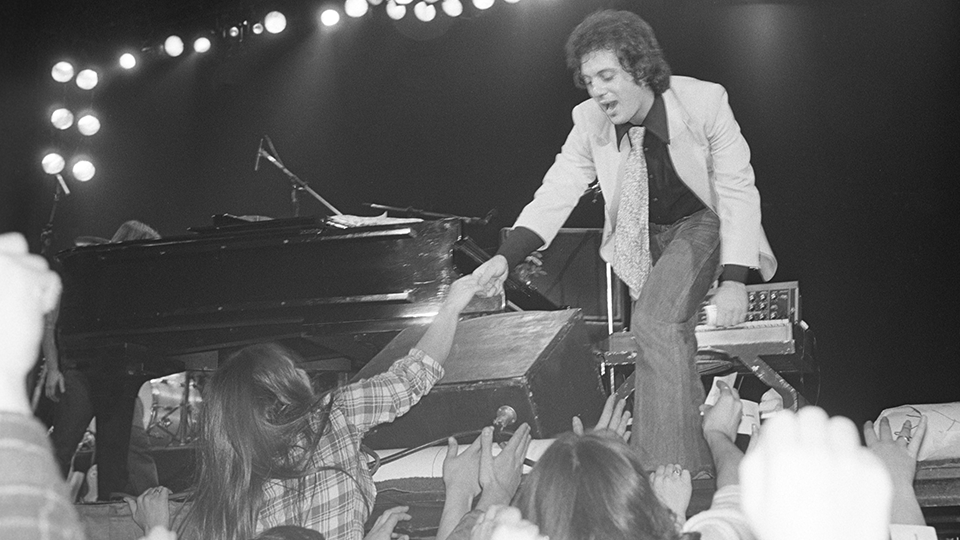
Billy Joel: And So It Goes
Director:
Susan Lacy / Jessica Levin
Producer(s):
Susan Lacy / Jessica Levin / Emma Pildes
Footage Archive Producer:
Katie Asch / Sydney Kapelus / John Jackson / Eric Kulberg
Archival Sources:
Billy Joel Archives / Sony Music Group Archives / ABC News VideoSource / Reelin' In The Years / Getty Images
Production Company:
Pentimento Productions
Country of Production:
United States
Original Release:
2025
Synopsis
BILLY JOEL: AND SO IT GOES is an expansive portrait of Billy Joel, the six-time GRAMMY®-winning, Rock & Roll Hall of Famer from Long Island, New York. With unprecedented access to never-before-seen performances, home movies, and personal photographs, along with intimate one-on-one interviews, the documentary explores the life and work of the singer/songwriter whose music has not only endured but soared across generations.
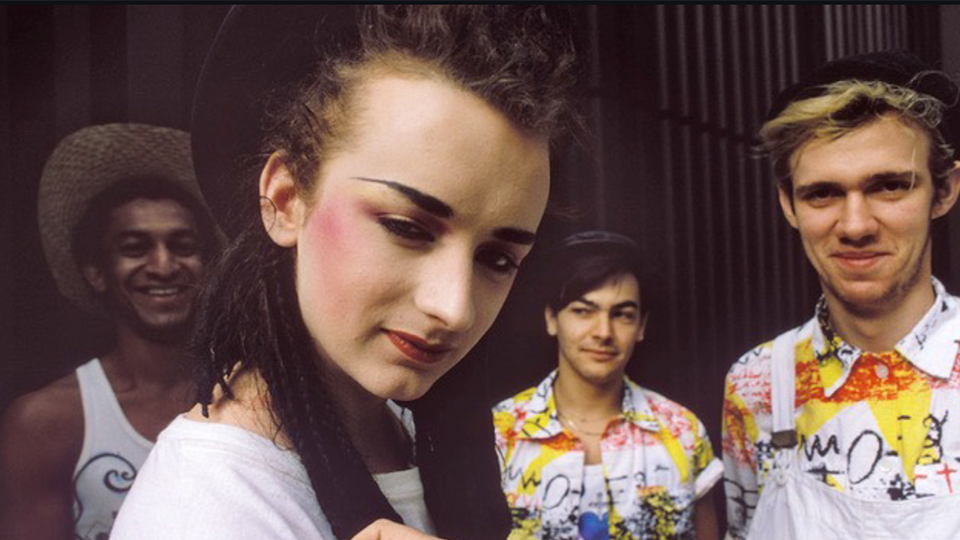
Boy George & Culture Club
Director:
Alison Ellwood
Producer(s):
Trevor Birney / Andrew Tully / Ben Silverman / Howard Owens / Natalia Nastaskin / Lawrence Mestel / David Blackman
Footage Archive Producer:
Kate Griffiths / Mike Griffiths
Archival Sources:
BBC / Getty Images / Reelin' In The Years Productions / Bell Media / ITV Archives / Lola Clips
Production Company:
Fine Point Films
Country of Production:
United Kingdom
Original Release:
2025
Synopsis
With humor, heart and a lot of glitz and glam, Boy George & Culture Club is an endlessly charming documentary that dives headfirst into the chaos, charisma and enduring bond of one of the most iconic bands of the ‘80s. Straight from the mouths of its four legendary members, Boy George & Culture Club is a love story about the undeniable fondness that flowed beneath the surface of these musical legends — and the drama and heartbreak in between.
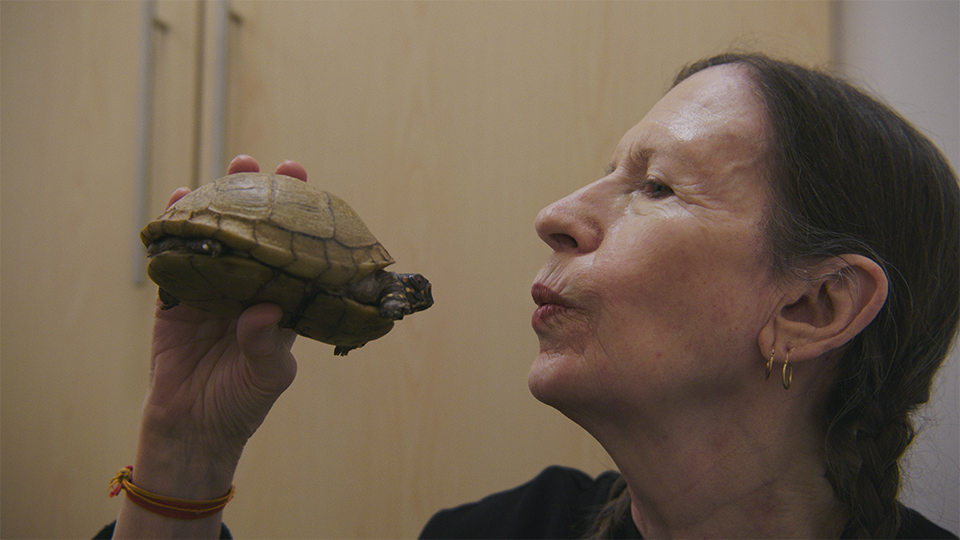
Monk in Pieces
Director:
Billy Shebar
Producer(s):
Billy Shebar / David Roberts / Susan Margolin
Footage Archive Researcher:
Vanessa Maruskin / Miles Shebar / Natalie Berger / Hirsh Sisodia / Peter Sciscioli
Footage Archive Producer:
Judy Aley
Archival Sources:
Meredith Monk House Foundation for the Arts / Michael Blackwood Productions / WDR mediagroup GmbH / Kinolibrary / Twin Cities Public Television
Production Company:
110th Street Films
Country of Production:
United States
Original Release:
2025
Synopsis
Meredith Monk – composer, performer, theater director, and filmmaker – is one of the great artistic pioneers of our time, yet her profound cultural influence is often overlooked. Monk in Pieces is a mosaic that mirrors the structure of her own work, and illuminates her wildly original vocabulary of sound and imagery.
As a female artist in the male-dominated downtown arts scene of the 1960s and 70s, Monk had to fight for recognition and resources. Early reviews in the New York Times were vicious and sexist: “a disgrace to the name of dancing,” wrote one male critic, and “so earnestly strange in a talented little-girl way,” wrote another. Yet, as her celebrated contemporary, Philip Glass, says, "she, among all of us, was – and still is – the uniquely gifted one."
In the film’s final chapters, Monk faces mortality. We see her warily entrust her masterpiece, ATLAS, to director Yuval Sharon and singer Joanna Lynn-Jacobs for a new production at the Los Angeles Philharmonic. For 60 years, Monk has directed and performed in all of her music theater works; now she must learn to let go. What will happen to such singular work after she is gone?
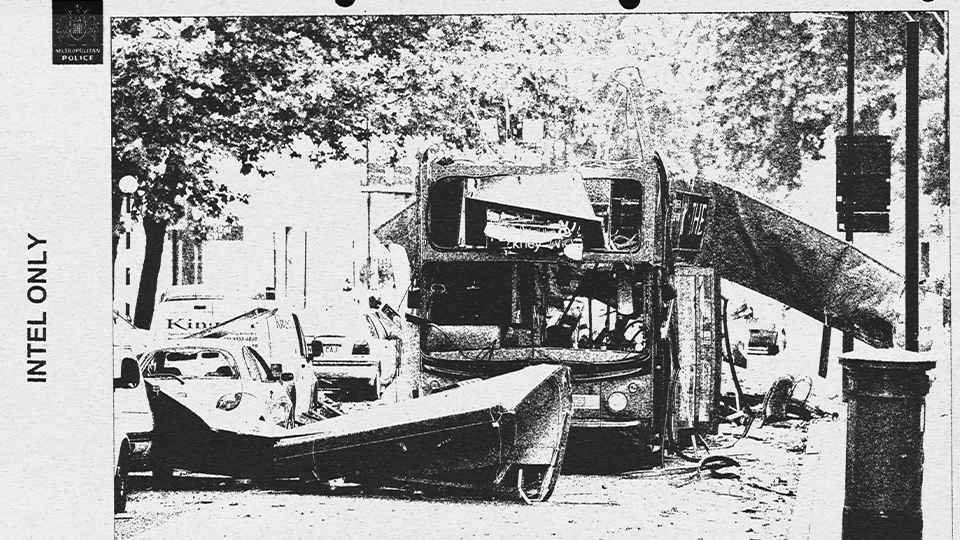
7/7: The London Bombings
Director:
Adam Wishart / Jim Nally
Producer(s):
Adam Wishart / Jim Nally / Neil Grant
Footage Archive Producer:
Mark Tinkler
Archival Sources:
BBC News archive / ITN / Getty Images / AP Archive / Reuters Screenocean / Coroner's Inquest into the London Bombings of 7 July 2005
Production Company:
The Slate Works /
Country of Production:
United Kingdom
Original Release:
2025
Synopsis
On 7 July 2005, four bombs exploded in London - the first suicide bombings on English soil. Hour by hour, day by day, this series tells story of the biggest police investigation in British history, combining interviews with Police, Emergency Responders, Investigators from the Security Services, Politicians, victims & victims' families with archive footage sourced from tape rushes from the time, UGC footage & stills filmed by victims & witnesses, and not-seen-before archive supplied by Emergency Service workers and Intelligence investigators. Later episodes followed the story as it moved to an international stage, as well as the investigations within the UK.
Archive, previously kept secret, supplied to the production by Police & Intelligence investigators helped shed new light on both the bombings themselves, as well the investigations. And the use of graphics was able to bring to life, audio and written archives that would otherwise be difficult to include.
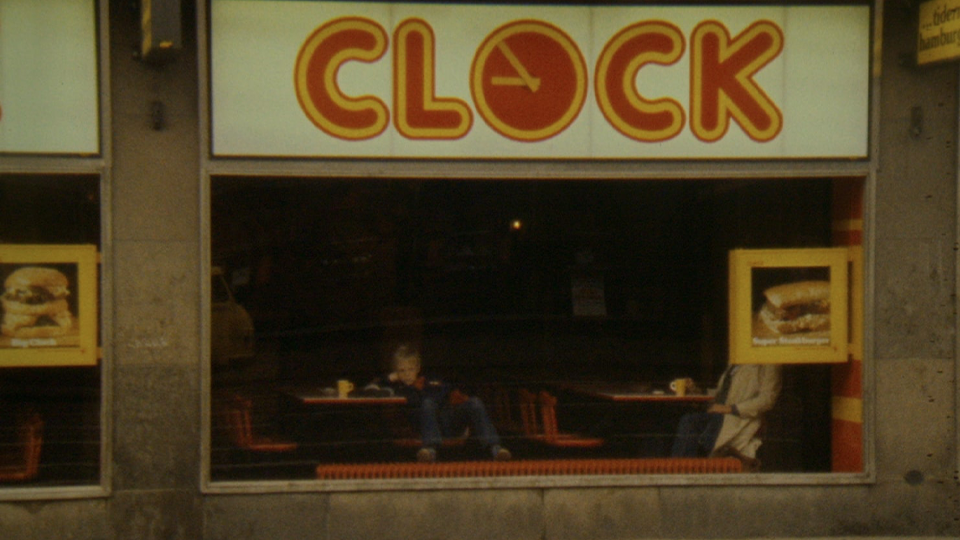
Clock - Socialist Burgers Inc.
Director:
Gustav Górecki
Producer(s):
Julia Wickström Giraldeau / Petter Hansson
Footage Archive Researcher:
Gustav Górecki / Petter Hansson / Annelie Bergman
Footage Archive Producer:
Petter Hansson / Julia Wickström Giraldeau
Archival Sources:
SVT Archives / Centrum för Näringslivshistoria / Private Archives / TT Bild / Getty Images
Production Company:
Deedy Group AB / SVT
Country of Production:
Sweden
Original Release:
2025
Synopsis
Clock – Socialist Burgers Inc. tells the story of the world’s only state-run hamburger chain, which competed against McDonald’s between 1976 and 1999.
In 1973, McDonald’s arrives in Sweden – a nation torn between fascination with and resistance to American culture. While the fast-food giant sparks both excitement and protests, the state-owned restaurant company SARA struggles to stay afloat. In a true Swedish compromise, they decide to create their own version of McDonald’s: Clock – The All-Time Hamburger.
The film rewinds the tape to explain how Sweden’s tradition of collective ownership could make such a socialist hamburger chain not only possible but logical. As the decades unfold, Clock mirrors Sweden’s transformation – from a welfare-state paradise of social democracy to a free-market society of privatization and venture capital.
Blending a wealth of archival footage, dramatizations, and animation, Clock – Socialist Burgers Inc. humorously reveals how the Swedes tried to steal the most American symbol of all – the hamburger – and how that attempt reflects a broader identity crisis. In the end, Clock is not just a tale of burgers and brands, but of a nation grappling with who it wants to be.
Hurricane Katrina: Race Against Time
Director:
Traci A. Curry
Producer(s):
Jonathan Chinn / Simon Chinn / Ryan Coogler / Myles Estey / Ted Skillman / Zinzi Coogler / Sev Ohanian / Peter Nicks / Kalia King
Footage Archive Producer:
Julieann Galdames
Archival Sources:
Rasmus Holm / Jason Affolder / John Keller / CNN / ABC News
Production Company:
Lightbox / Proximity Media / National Geographic
Country of Production:
United States
Original Release:
2025
Synopsis
When Hurricane Katrina unleashed a catastrophic flood on New Orleans, it exposed far more than the vulnerabilities in the city's faulty levee system. Told through emotional moment-to-moment accounts of survivors and through riveting and immersive archival footage - some of it never before seen - this five-part premium series reveals Katrina as a disaster that was anything but natural.
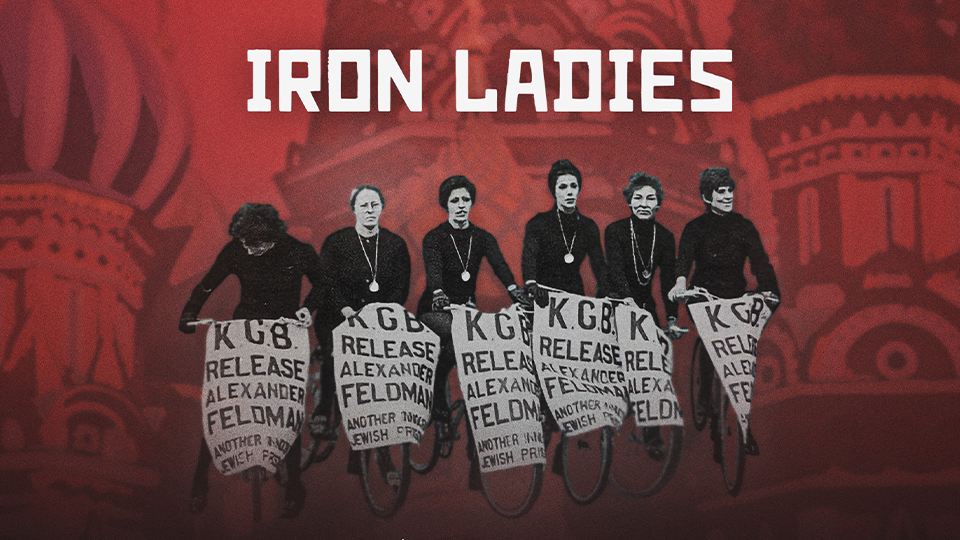
The story of how an international network of young Jewish women took on the might of the Soviet Union, at the height of the Cold War, in support of persecuted “Refusenik” Jews… and won.
Vietnam: The Birth of a Nation
Director:
Philipp Gromov / Lucio Mollica / Lena Noad
Producer(s):
Regina Bouchehri / Gunnar Dedio / Birgit Rasch / Eleonora Faccio / Ilona Dedio / Katarzyna Ozga
Footage Archive Researcher:
William Qualey / Katarina Rakic / Đoàn Hồng Lê / Alex-Thái Đình Võ / Minh Anh Đỗ / Kerstin Lommatzsch / Devi Liebergesell
Footage Archive Producer:
Laura Böhme
Archival Sources:
Vietnamese Film Institute / Vietnam National Museum Of History / Gaumont Pathé (Orchidée Collection and André Sauvage Collection) / PROGRESS - DEFA (Deutsche Film AG) / ECPAD (l'Établissement de Communication et de Production Audiovisuelle de la Défense)
Production Company:
LOOKS Film & TV Produktionen GmbH / LOOKS Filmproduktionen GmbH / LOOKS Warsaw / Morgana Studio
Country of Production:
Germany / Poland / Italy
Original Release:
2025
Synopsis
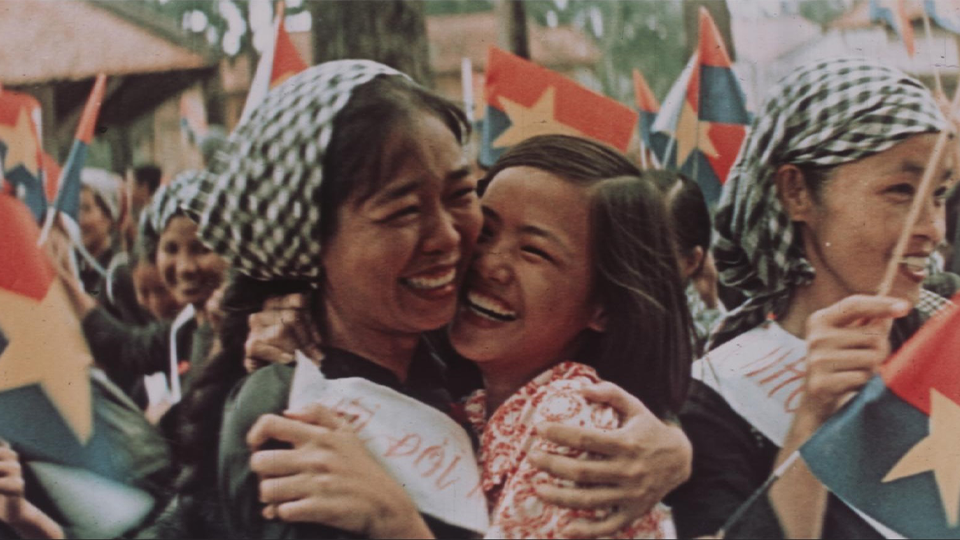
In April 1975, the war in Vietnam came to an end. Fifty years later, this four-part documentary series retraces the journey of the Vietnamese people—from the time Vietnam was part of the French colonial empire, through decades of war and fragile peace, to the present day.
Among them are a member of the royal family, the son of the communist leader Le Duan, the minister of information of the US-allied government, soldiers from both the North and the South, Buddhists and Catholics, “Viet Cong” and “boat people.”
Filmed in Vietnam and along the routes of the Vietnamese diaspora, across three continents and six countries, the series provides a new understanding of this nation that fought for its freedom, became the epicenter of the Cold War and is still dealing with the aftermath of such a dramatic past. 50 years after the end of the war, there has not been an open dialogue among Vietnamese who fought on opposite sides and wounds are still open. This series offers the opportunity to discover dreams, memories and traumas on both sides and provide a memorable lesson to understand the conflicts of today.
Deaf President Now!
Director:
Nyle DiMarco / Davis Guggenheim
Producer(s):
Nyle DiMarco / Davis Guggenheim / Amanda Rohlke / Jonathan King / Michael Harte / Laurene Powell Jobs
Footage Archive Researcher:
Anna Louie / Crosley Wong / Mike Nichols
Footage Archive Producer:
Austin Wilkin / Mariah Yamamoto
Archival Sources:
Gallaudet University / Jeff Beatty & Yoon Lee / ABC News VideoSource / CNN Archive / Personal Archives of Tim Rarus, Bridgetta Bourne, Greg Hlibok, Jerry Covell, and King Jordan.
Production Company:
Apple TV / Concordia Studio
Country of Production:
United States
Original Release:
2025
Synopsis
The story of the greatest civil rights movement most people have never heard of.
“Deaf President Now!” recounts the eight days of historic protests held at Gallaudet University in 1988 after the school’s board of trustees appointed a hearing president over several very qualified Deaf candidates. After a week of rallies, boycotts and protests, the students of Gallaudet University triumph as the hearing president resigns and beloved dean Dr. I. King Jordan becomes the university’s first Deaf president. The protests marked a pivotal moment in civil rights history, with an impact that extended well beyond the Gallaudet campus, and paved the way for the Americans with Disabilities Act (ADA). “Deaf President Now!” features exclusive interviews with the five key figures of the movement, including the Gallaudet Four — Jerry Covell, Bridgetta Bourne-Firl, Tim Rarus and Greg Hlibok — alongside I. King Jordan, as well as archival and scripted elements. The film also incorporates an experimental narrative approach called Deaf Point of View, using impressionistic visual photography and intricate sound design to thrust the audience into the Deaf experience.
True North
Director:
Michèle Stephenson
Producer(s):
Leslie Norville
Footage Archive Researcher:
João Vitor Corrêa / Jalana Lewis / Stefanie McCarrol / Valérie Lessard / Ayan Tani
Footage Archive Producer:
Juan Bello
Archival Sources:
National Film Board of Canada / Canadian Broadcasting Corporation / Archives Radio-Canada / Bell Media / British Pathé
Production Company:
Studio 112 Inc. / Revolution Remix LLC
Country of Production:
Canada / United States
Original Release:
2025
Synopsis
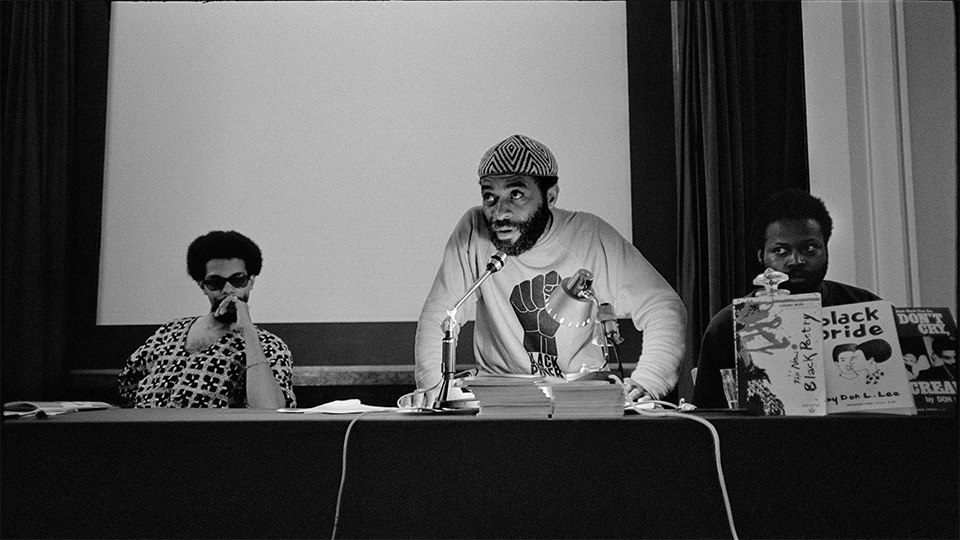
Set against 1960s Montreal, TRUE NORTH uncovers two pivotal yet underrecognized events the Congress of Black Writers and the Sir George Williams Affair, revealing the city as a crucial nexus in the global Black liberation movement. Drawing on never-before-seen archival footage and intimate first-person testimonies, the film revisits a charged era of resistance, when Black students and activists confronted institutional racism and sparked reverberations far beyond Canada.
Taking a hemispheric view of Black resistance, TRUE NORTH connects struggles across the Caribbean, Canada, and the United States, tracing shared legacies of colonialism, migration, and state violence. At its core are the voices of elders who lived this history and whose contributions have too often been erased. Their stories ground the film with clarity and urgency, offering a rare, lived perspective on a transformative moment.
Visually striking and emotionally resonant, TRUE NORTH is both a love letter to 1960s Montreal and a radical reimagining of its place in history. Through bold artistry and rigorous truth-telling, the film becomes an act of remembrance and a call to action, inviting new generations into an immersive experience whose lessons remain urgent, alive, and unfinished. It repositions Montreal as central, not peripheral, to Black internationalist histories.
The Bibi Files
Director:
Alexis Bloom
Producer(s):
Alexis Bloom / Alex Gibney / Raviv Drucker / Kara Elverson / David Rahtz
Footage Archive Researcher:
Daniel Bellone
Footage Archive Producer:
Eitan Amrami
Archival Sources:
Leaked Israeli police interrogation footage / IPBC-Kan / AP / NBC / CH12 News Israel
Production Company:
Jigsaw Productions
Country of Production:
United States
Original Release:
2025
Synopsis
The Bibi Files is a searing documentary about corruption, power, and survival.
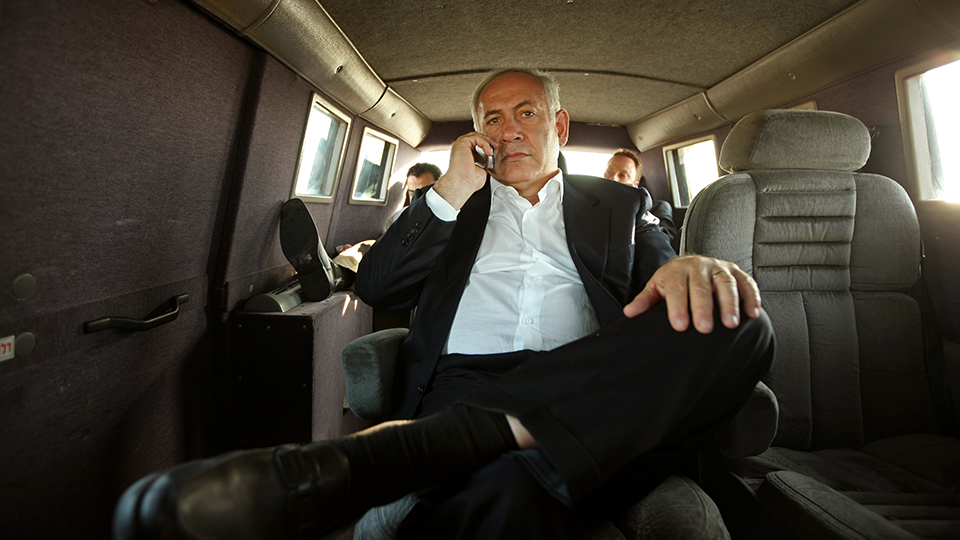
The film centers on Israeli Prime Minister Benjamin Netanyahu, a leader whose political career has been marked by his relentless pursuit to remain in power, even at the cost of his country’s democratic values. The filmmakers were leaked never-before-seen police interrogation videos of Netanyahu, his family, and his closest allies, exposing a steady pattern of lavish gifts and quid pro quo dealings with powerful media and business figures.
This footage is interwoven with archival material that traces Netanyahu’s three decades in power and the deep divisions his leadership has left in Israeli society. Interviews with journalists, statesmen, longtime friends, and former associates reveal a chilling portrait of a man who, to avoid justice, forged alliances with radical right-wing extremists.
Ultimately, The Bibi Files shows how Netanyahu’s obsession with political survival has endangered Israel’s security, eroded its democratic standing, and echoed the authoritarian impulses now threatening democracies around the globe.
Breakdown: 1975
Director:
Morgan Neville
Producer(s):
Lauren Belfer / Morgan Neville
Footage Archive Researcher:
Jackie Clary
Footage Archive Producer:
Jane Kelly Kosek
Archival Sources:
Retro Video / Veritone / CBS News Archives / AP Archive / Getty Images / Carson Entertainment
Production Company:
Tremolo Productions
Country of Production:
United States
Original Release:
2025
Synopsis
Breakdown: 1975 is an exploration of the time period beginning with Nixon's resignation in August 1974 and going through to the Bicentennial celebrations in July 1976, looking specifically at how the films of this pivotal era, such as Jaws, Dog Day Afternoon, Taxi Driver, Nashville, Network, All the President’s Men, Alice Doesn’t Live Here Anymore, Chinatown, and many more, served as a mirror for the social and political shifts occurring at that time. In the mid-70s, America was having a nervous breakdown. Crime was up, tensions were high, paranoia was rampant. There was one question: What the hell was going on? This movie tries to answer that question.
Craigavon, New City
Director:
Colm Laverty
Producer(s):
Colm Laverty / Francis Jones / Lisa Duggan
Footage Archive Researcher:
Paul McClintock / Bronagh McAtasney / Evan Marshall
Footage Archive Producer:
Colm Laverty
Archival Sources:
Digital Film Archive / British Newspaper Archive / The JR James Archive / Craigavon Museum Collection / Ordinance Survey Maps, Public Record Office Northern Ireland
Production Company:
Northern Ireland Screen
Country of Production:
United Kingdom
Original Release:
2025
Synopsis
Filmmaker Colm Laverty looks at the story of Craigavon, a new city developed in the Northern Ireland countryside and in line with the movement towards high-tech communal living as already under way in Cumbernauld and Milton Keynes. This film blends archive footage and contemporary interviews to tell the story of the Craigavon New City project and reflect on the hopes, complexities, and legacy of the project. Sixty years on feelings still run strong on the loss of farm land and countryside for a project that many feel never reached its potential as violent conflict enveloped Northern Ireland.
Reelin' In The Years Productions / David Paradine Productions / Veritone / Getty Images / ABC News Video Source / KABC-TV
Production Company:
Sky Studios / Paradine Productions / White Horse Pictures
Country of Production:
United Kingdom
Original Release:
2025
Synopsis
Of all David Frost’s interviews, it is the 28 hours he records with the disgraced former President Richard Nixon that have left their deepest mark in popular culture. As an Englishman, David is an outsider, but he outbids the US television networks for the opportunity to confront Nixon.
Nixon has received a Presidential pardon so these interviews will be the only opportunity to call him to account for his alleged crimes: covering up the infamous Watergate affair and authorising illegal covert operations on his enemies. David must draw out an apology; he’s staked both his professional integrity and $10million in today’s money. It’s a battle of the titans that will go on to play out on stage and screen in Frost/Nixon.
El negre té nom (The Black Man Has a Name)
Director:
Fèlix Colomer
Producer(s):
David Bassa Cabanas / Sílvia Pairó Vila / Leire Ariz / Frank Belyeu / Fèlix Colomer Vallès
Footage Archive Producer:
Francesc Perez Rodriguez
Archival Sources:
3Cat / TVE / The New York Times / The European / El Punt Avui
Production Company:
3Cat / Producciones del K.O.
Country of Production:
Spain
Original Release:
2025
Synopsis
The man in the glass cage.
He was displayed like an artifact. But he was a man. For 88 years, his body stood behind glass in a small-town museum in Spain. Dissected, taxidermied, and labeled "Bushman", stripped of name, story, and dignity. His journey began with colonial violence and ended in global controversy. In 1991, one voice dared to ask: What is a human life worth? The answer shook a country and nearly derailed the Barcelona Olympics.
This is the first time his full story is told. Haunting, urgent, ungorgettable.
Apollo 1
Director:
Mark Craig
Producer(s):
Mark Craig / Keith Haviland / Ansgar Pohle
Footage Archive Researcher:
Mark Craig
Footage Archive Producer:
Steve Bergson / Joe Harris
Archival Sources:
U.S. National Archives & Records Administration (NARA) / Associated Press / CBS News (Veritone) / ABC News / Pond5
Production Company:
Stopwatch Productions / Haviland Digital / 7T1 Films
Country of Production:
United Kingdom / Germany
Original Release:
2025
Synopsis
Three pioneering astronauts in a race to the Moon put their faith in a new spacecraft riddled with problems...
In 1967 Gus Grissom, Ed White and Roger Chaffee perished in a launchpad fire, the repercussions of which shook the US space program to the core, and left a lasting impact on their families and on all space flights since.
With exceptional access granted to the production team and including unseen personal archive, it's a story of jeopardy, tragedy and recovery, as told by those closest to the crew.
Ultimately, it’s an inspiring personal story of human endeavour, as the crew of NASA's Artemis II prepares to journey to the Moon and beyond, for the first time since 1972.
Broken English
Director:
Iain Forsyth / Jane Pollard
Producer(s):
Beth Earl
Footage Archive Producer:
Mike Griffiths / Kate Griffiths / Tess McNally-Watson
Archival Sources:
BBC Motion Gallery / Getty Images / ITV Archives / Reuters / VRT / INA
Production Company:
Rustic Canyon Pictures
Country of Production:
United Kingdom
Original Release:
2025
Synopsis
Broken English is a bold documentary portrait of the inimitable singer, songwriter and icon Marianne Faithfull.
A survivor, provocateur and true original, Marianne has spent more than six decades defying expectations — releasing over thirty-five albums while constantly reinventing herself. Made with her full involvement, Broken English is an intimate and unflinching exploration of a fractured yet unbreakable life shaped by fame, creativity and relentless public scrutiny.
The film unfolds within the Ministry of Not Forgetting — an imagined, cinematic institution where memory and mythology collide.
Broken English is a genre-defying act of resilience and rebellion — Marianne Faithfull’s final fearless declaration, her defiant swan song.
Broken English
Director:
Iain Forsyth / Jane Pollard
Producer(s):
Beth Earl
Footage Archive Producer:
Mike Griffiths / Kate Griffiths / Tess McNally-Watson
Archival Sources:
BBC Motion Gallery / Getty Images / ITV Archives / Reuters / VRT / INA
Production Company:
Rustic Canyon Pictures
Country of Production:
United Kingdom
Original Release:
2025
Synopsis
Broken English is a bold documentary portrait of the inimitable singer, songwriter and icon Marianne Faithfull.
A survivor, provocateur and true original, Marianne has spent more than six decades defying expectations — releasing over thirty-five albums while constantly reinventing herself. Made with her full involvement, Broken English is an intimate and unflinching exploration of a fractured yet unbreakable life shaped by fame, creativity and relentless public scrutiny.
The film unfolds within the Ministry of Not Forgetting — an imagined, cinematic institution where memory and mythology collide.
Broken English is a genre-defying act of resilience and rebellion — Marianne Faithfull’s final fearless declaration, her defiant swan song.
Ghana National Film Archive / Associated Press / British Pathé / Reuters / British Film Institute
Production Company:
Breakwater Studios / Higher Ground Media
Country of Production:
United States
Original Release:
2025
Synopsis
From Oscar®-winning director Ben Proudfoot, THE EYES OF GHANA is a stunning feature documentary following 93-year-old documentarian Chris Hesse—personal cinematographer to forgotten African icon Kwame Nkrumah—as he races against blindness and time to rescue and repatriate a secret trove of over 1,000 films that captured the birth of African independence in the fifties and sixties. Yet unseen by the public, these films may not only rewrite Ghanaian and African history—but world history itself.
Je n'avais que le néant - "Shoah" by Lanzmann (All I Had Was Nothingness)
Director:
Guillaume Ribot
Producer(s):
Estelle Fialon / Dominique Lanzmann
Footage Archive Producer:
Guillaume Ribot
Archival Sources:
"Shoah" by Claude Lanzmann (1985)
Production Company:
Les Films du Poisson / Les Films Aleph / ARTE France
Country of Production:
France
Original Release:
2025
Synopsis
Claude Lanzmann spent 12 years creating "Shoah" (1985), a groundbreaking film that redefined Holocaust representation. 40 years later, filmmaker Guillaume Ribot explores 220 hours of unreleased footage.
Lanzmann’s quest to capture the reality of the Holocaust led him to interview victims, witnesses, and perpetrators from all over the world. Overcoming doubt, setbacks, and false leads, he embarked on an unparalleled journey culminating in a landmark masterpiece, now part of UNESCO’s Memory of the World Register.
Only using Lanzmann’s own words drawn from his memoirs and never-before-seen excerpts, Guillaume Ribot pays homage to one of cinema’s masterpieces and to its director’s relentless pursuit of telling the untold.
Black Is Beautiful: The Kwame Brathwaite Story
Director:
Yemi Bamiro
Producer(s):
Joanna Boateng / Lizzie Gillett / Ian Bonhôte / Andrew Calof
Footage Archive Producer:
Emma Dempsey
Archival Sources:
Kwame Brathwaite Family Archive / WNET / ABC News / Historic Films / Imago
Production Company:
Misfits Entertainment / Wayfarer Studios / Mediawan Rights / Entourage Media / Shanakee Archive Agency
Country of Production:
United Kingdom / United States
Original Release:
2025
Synopsis
This feature documentary uncovers the extraordinary life, work, and legacy of the long-overlooked yet hugely influential photographer and activist Kwame Brathwaite, a central figure in the Black is Beautiful movement.
While ‘Black is Beautiful’ is now widely recognised as a slogan and concept, few people know where it came from or the people behind it and one of the key people to elevate the idea in public consciousness was Kwame Brathwaite. This film reveals Kwame’s profound impact on Black identity, culture and politics, tracing the lasting ripple effects of his work across generations and around the globe.
Spanning seven decades, the story begins in 1950s Harlem where Kwame began documenting a vibrant cultural scene, and continues to the present day, as his son, Kwame Jr., faces the challenge of preserving the vast photographic archive he has inherited. Through these images, we discover the depth of Kwame’s vision and achievements.
Though Black history is still often framed by pain and trauma, this film instead celebrates Black beauty through joy, pride, and creativity. It is both a tribute to a groundbreaking artist and an act of preservation in itself, securing Kwame Brathwaite’s rightful place in history.
Stiller & Meara: Nothing Is Lost
Director:
Ben Stiller
Producer(s):
Ben Stiller / Geoffrey Richman / Lizz Morhaim / John Lesher
Apple Original Films / XTR / Pickled Entertainment / Red Hour
Country of Production:
United States
Original Release:
2025
Synopsis
Ben Stiller tells the story of his parents, comedy duo, Jerry Stiller and Anne Meara, exploring their impact both on popular culture and at home, where the lines between creativity, family, life and art often blurred.
Quand tu écouteras cette chanson (When You Listen to this Song)
Director:
Mona Achache
Producer(s):
Anne Schuchman-Kune
Footage Archive Researcher:
Gianna Franceschini
Footage Archive Producer:
Sharon Hammou
Archival Sources:
Gaumont Pathé Archives / FPA Classics / INA / Les Documents cinématographiques / Beeld & Geluid
Production Company:
Schuch Productions
Country of Production:
France
Original Release:
2025
Synopsis
In August 2021, writer Lola Lafon spent a night alone in the Annex of the Anne Frank Museum, where the young girl and her family hid from 1942 to 1944. This experience gave rise to a book, "Quand tu écouteras cette chanson", and now its documentary adaptation. Over the course of a night, the author revisits her story. An inner journey around the figure of Anne Frank and the power of writing in the face of oblivion.
My Mom Jayne: A Film by Mariska Hargitay
Director:
Mariska Hargitay
Producer(s):
Mariska Hargitay / Trish Adlesic
Footage Archive Researcher:
Olivia Streisand
Footage Archive Producer:
Lindsey Schneider
Executive Producer(s):
Lauran Bromley / Nancy Abraham / Lisa Heller
Senior Producer(s):
Anna Klein
Archival Sources:
Fox Media Archives / Associated Press / Reuters / BBC / INA MediaPro
Production Company:
Mighty Entertainment
Country of Production:
United States
Original Release:
2025
Synopsis
In her feature film directorial debut—and the first time she has delved into her mother Jayne Mansfield’s story—Mariska Hargitay searches for the mother she never knew almost six decades after the Hollywood legend’s tragic death. Through intimate interviews and an extensive collection of never-before-seen photos and home movies, she grapples with her mother’s complicated public and private legacy, uncovering the surprising layers and depth of who Jayne was, not only to her fans, but also to those closest to her.
Mariska was three years old when her mother, Jayne Mansfield, tragically died in a car accident at the age of 34—leaving behind five children. The film follows Mariska as she seeks to answer her long-held questions about her mother.
Featuring film clips from Jayne’s work in the 1950s and ‘60s, archival footage from her many talk show appearances and interviews, as well as striking personal footage, the film contextualizes the dazzling star power of the most photographed Hollywood celebrity of her day. A story of loss and longing, healing and transformation, MY MOM JAYNE is a testament to the rewards of an unflinching search for truth to reclaim her mother’s story—and her own.
Do You Love Me
Director:
Lana Daher
Producer(s):
Jean-Laurent Csinidis / Lana DAHER
Footage Archive Researcher:
Emmanuelle Yacoubi
Archival Sources:
Nadi Lekol Nas / Abbout Productions / Bahij Hojeij / Association Jocelyne Saab / Mille et une productions
Production Company:
Films de Force Majeure / My Little Films / Wood Water Films
Country of Production:
France / Lebanon / Germany
Original Release:
2025
Synopsis
DO YOU LOVE ME is an archive-based documentary that follows the lived experiences of generations of Lebanese from the 1950s until today. It utilises a wide range of mixed media collected from journalistic archives, T.V. & pop culture, video art pieces, photography, radio, newspaper prints, documentary and fiction films, home videos, and personal archives. The film covers the oscillation between moments of war and moments of calm throughout the given period. Featuring the stories, anecdotes, songs, art, and culture of the people who remained in Lebanon through these years we begin to see and understand this society’s collective memory, dynamics, and psyche. Rather than recounting a more traditional history, the film attempts to portray an emotional ethnography of the Lebanese people. It presents us with the conundrum of a country that is stuck between a rock and a hard place, unable to agree on its own past, present, or future. The film’s focus is not on a deep nostalgia for the past or the promise of any answers: instead, it lingers on the questions raised about life in these challenging times and how it affects our experience of the present.
Black Is Beautiful: The Kwame Brathwaite Story
Director:
Yemi Bamiro
Producer(s):
Joanna Boateng / Lizzie Gillett / Ian Bonhôte / Andrew Calof
Footage Archive Producer:
Emma Dempsey
Archival Sources:
Kwame Brathwaite Family Archive / WNET / ABC News / Historic Films / Imago
Production Company:
Misfits Entertainment / Wayfarer Studios / Mediawan Rights / Entourage Media / Shanakee Archive Agency
Country of Production:
United Kingdom / United States
Original Release:
2025
Synopsis
This feature documentary uncovers the extraordinary life, work, and legacy of the long-overlooked yet hugely influential photographer and activist Kwame Brathwaite, a central figure in the Black is Beautiful movement.
While ‘Black is Beautiful’ is now widely recognised as a slogan and concept, few people know where it came from or the people behind it and one of the key people to elevate the idea in public consciousness was Kwame Brathwaite. This film reveals Kwame’s profound impact on Black identity, culture and politics, tracing the lasting ripple effects of his work across generations and around the globe.
Spanning seven decades, the story begins in 1950s Harlem where Kwame began documenting a vibrant cultural scene, and continues to the present day, as his son, Kwame Jr., faces the challenge of preserving the vast photographic archive he has inherited. Through these images, we discover the depth of Kwame’s vision and achievements.
Though Black history is still often framed by pain and trauma, this film instead celebrates Black beauty through joy, pride, and creativity. It is both a tribute to a groundbreaking artist and an act of preservation in itself, securing Kwame Brathwaite’s rightful place in history.
Trainline "Get Your Bum On Board"
Director:
Glenn Kitson
Producer(s):
Priya Shial
Footage Archive Researcher:
Ed Cook / Pepito Moran / Morgan Foye / Marijana Radovic / Katarina Stankovic / Dragana Jovanovic
Footage Archive Producer:
Marina Sanchez
Archival Sources:
Independent sources & archives / Social media platforms (Instagram, YouTube etc) / Footage libraries (Getty, Alamy, Pond5, among others) / UGC media libraries (Jukin, Newsflare, among others)
Production Company:
DEPT / STALKR
Country of Production:
United Kingdom
Original Release:
2025
Synopsis
"Bums on Board”, the spot is a cheeky homage to the nation’s rears and their collective power to make a greener choice and travel by train. The film draws on the iconic 70’s punk aesthetic, with a collage-heavy, energetic and rebellious feel, with bright colours, torn graphics and gritty type. The visuals are propelled by a cheeky and humorous script delivered courtesy of actor and comedian Asim Chaudhry.
'Starring GREAT Britain' campaign
Director:
Tom Hooper
Producer(s):
Tom Moxham
Footage Archive Researcher:
Hazel May
Footage Archive Producer:
Jared Brown
Archival Sources:
Disney / Netflix / Universal / Sony Pictures / Warner Bros.
Production Company:
SMUGGLER / Hazel May ltd / Pablo London / Whitehouse Post / Framestore
Country of Production:
United Kingdom
Original Release:
2025
Synopsis
The global campaign invites viewers to discover the REAL star of the show, Great Britain, through the cinematic lens of film & TV.
Born of the insight that Britain is the birthplace to the world’s most loved and highest grossing films and franchises and home to world class storytellers, from the people behind the camera, to those in front of it: "Starring GREAT Britain" celebrates Britain’s enduring role as a world-leading screen production destination and taps into the ‘set-jetting’ trend to shift the spotlight to the true and often overlooked star - the country itself. Inviting tourists to experience the magic of film in real life by booking a trip to visit Britain.
The integrated campaign gives viewers a front row seat to the real British destinations at the heart of the on-screen action, and was launched with a blockbuster film, directed by Academy Award-winning director Tom Hooper, and was created in collaboration with the world’s biggest studios, including: The Walt Disney Company, Netflix, Paramount Pictures, Sony Pictures Entertainment, STUDIOCANAL, Universal Pictures, Warner Bros and Discovery.
Danette "Top of the Pop"
Director:
Antoine Bardou-Jacquet
Producer(s):
Laureen Rigot
Footage Archive Researcher:
Ed Cook / Pepito Moran / Morgan Foye / Marijana Radovic / Katarina Stankovic / Dragana Jovanovic
Footage Archive Producer:
Marina Sanchez
Archival Sources:
Independent sources & archives / Hollywood studios (Warner Bros, Universal, Sony) / IMG & Sports federations / Social media platforms (Instagram, YouTube etc) / TV broadcasters + production companies
Production Company:
BETC / STALKR
Country of Production:
France / United Kingdom
Original Release:
2025
Synopsis
"Danette’s famed tagline, “We all stand up for Danette” is given a very literal interpretation in this dynamic and fun film, packed with memorable moments from the worlds of sports, films, TV series, and viral videos.
A host of recognisable characters feature in the spot, with Nosferatu, the Teletubbies sun, Rabbid rabbits, and Joey from FRIENDS making appearances, all accompanied by the iconic song “Surfin’ Bird” by The Trashmen."
Brompton 'Life Unfolded'
Director:
Oliver Murray
Producer(s):
James Bolton
Footage Archive Producer:
Oliver Murray
Archival Sources:
Brompton Folding Bikes / Private Archives of Cycling Enthusiasts
Production Company:
Mythsmyth / The Liberty Guild
Country of Production:
United Kingdom
Original Release:
2025
Synopsis
Andrew Ritchie created the first iconic folding Brompton bike in 1975. Highly prized for its portability and durability, each bike, to this day, is proudly handmade and quality-assured in their London Factory. As the brand turns 50, Brompton launched its landmark birthday with ‘Life Unfolded’, a campaign written by The Liberty Guild which celebrates the unique brilliance of the Brompton bicycle. The centrepiece of the campaign is this film which draws down on the Brompton archives to celebrate their unique heritage. A Brompton bike is the ultimate mobility choice designed to bring joy, health and adventure to riders in cities all over the world, and Life Unfolded is the ultimate expression of that.
ABinBev "Cheers to Bars"
Director:
Henry Joost / Rel Schulman
Producer(s):
Alexandra Nish
Footage Archive Researcher:
Craig Phillips / Jen Tam / Itzel Sarabia / Brandi Self / Chelsea Zerbe / Aaron Sharper / Mike Kho
Footage Archive Producer:
Maureen Cavanaugh
Archival Sources:
Individual Personal Collections / Getty Images / Magnum Photos / Alamy
Production Company:
PS260 / STALKR
Country of Production:
United States
Original Release:
2025
Synopsis
A journey through the moments large and small that happen in bars, starting with a nod to legendary historical venues such as the iconic underground haunt CBGB, The Cavern Club, home of The Beatles, and The Freemason’s Arms, the birthplace of soccer. Then the story moves into a flurry of artistic BAR signs and more personal moments, like hitting a bullseye, dancing to jukebox music, meeting friends, falling in love, getting married, and saying goodbye. Bars are places where people come together and life happens as seen in the archival content in this moving spot.A journey through the moments large and small that happen in bars, starting with a nod to legendary historical venues such as the iconic underground haunt CBGB, The Cavern Club, home of The Beatles, and The Freemason’s Arms, the birthplace of soccer. Then the story moves into a flurry of artistic BAR signs and more personal moments, like hitting a bullseye, dancing to jukebox music, meeting friends, falling in love, getting married, and saying goodbye. Bars are places where people come together and life happens as seen in the archival content in this moving spot.
We use cookies to understand how our website is used. These are only set if you accept. Read our cookie policy.