2026 FOCAL International Awards Shortlisted Nominees
The FOCAL Awards celebrate three areas – production, restoration and preservation, and people. All our production categories celebrate the very best use of footage within the production, programme or project.
Please select the award category you wish to view from the drop down box.
2026 Best Archive Restoration & Preservation Project or Title
2026 Winner
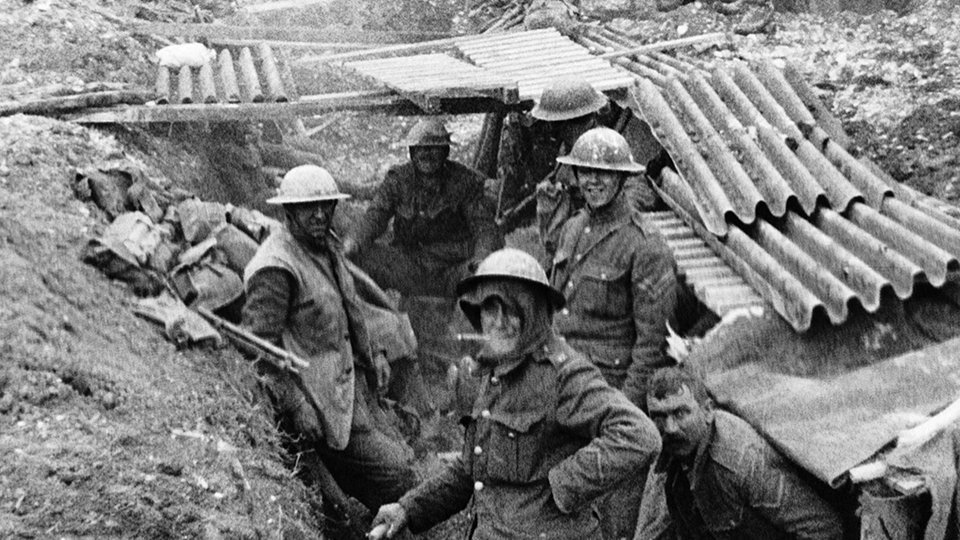
The German Retreat and Battle of Arras
Production Company:
IWM (Imperial War Museums)
Synopsis
The restoration of Battle of Arras (1917), completes IWM’s thirty-year project to digitally restore the Big Battle Films (Battle of the Somme, Battle of the Ancre); a groundbreaking trilogy of factual films that raised the status of film in Britain, leading to the first film archive at IWM and the recognition of archive footage as a key element in films about the past.
IWM’s aim was to create accessible versions, appreciated by general audiences, but that reflected current technical and ethical practices for film restoration. For ‘Arras’, this meant a version that was faithful to the distribution prints screened in 1917. Along with the usual defects and damage typical of films preserved from this era, ‘Arras’ brought its own challenges for the restorers – poor documentation, evidence of editing in the archives, and the existence of coloured shots and titles that were incomplete and fading. IWM overcame these challenges with experience gained from the ‘Somme’ and ‘Ancre’, an ethical framework, and innovation in restoration practise, such as the adoption of Cineteca di Bologna’s Edit Decision List, the Flueckiger method to recreate the coloured sequences, and a collaborative and dynamic partnership between IWM and the digital restoration team at the University of Udine, that benefitted the restoration process.
Archival highlights
Battle of Arras was sponsored by the War Office Cinematograph Committee and produced by the Topical Film Company. It was filmed by four documentary and newsreel cameramen, who were employed, billeted, and fed by the Army. They wore the official uniform issued to the press. The cameramen filmed from the opening of Battle of Arras (8/9 April 1917) until the 19th May but also recorded preparatory action in January and March 1917. There are no records about the production of the film and, other than the cameramen, we do not know who made it; the only other named person is William F. Jury, the Booking Director. Our research suggests the production followed the pattern of Battle of the Somme and Battle of the Ancre: the cameramen bringing back the exposed footage and their notes of what they filmed to London, where it was edited by an unnamed producer, assisted by one or more of the cameramen, with Captain Faunthorpe from military intelligence writing the titles. Once the footage was edited a rough cut was screened to War Office officials and then sent to Army Headquarters in France for more scrutiny and censorship. Any cuts identified by the Chief Censor were made back in London. The film was trade shown on 6th June 1917 and premiered on 25th June.
IWM’s restoration of the 16 coloured shots and red intertitles marks a revival of the original nature of the film - no coloured version has been available since the tinted nitrate print was withdrawn from use before the Second World War. The general restoration work to make the film complete, to repair damage and rectify defects has greatly improved the viewing experience. This is the most complete and 'viewable' version since 1917; expert viewers and critics have even remarked on its beauty.
Shortlisted
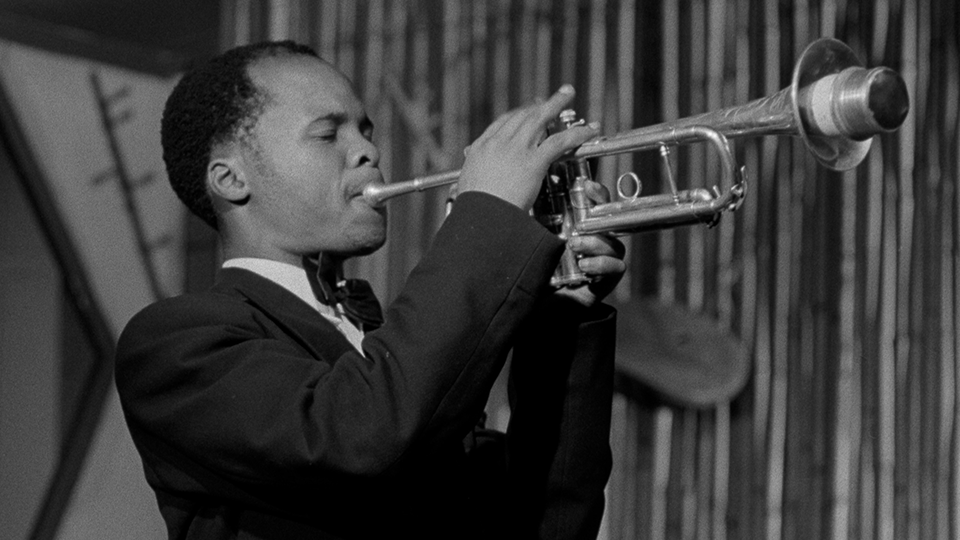
African Jim (also known as Jim Comes to Jo'burg)
Production Company:
R3store Studios
Synopsis
Originally released in 1949, Jim Comes to Jo’burg-also known as African Jim-was the first feature-length entertainment film made with a black cast and specifically for black audiences in South Africa. It marked the screen debut of the legendary Dolly Rathebe and was directed by Donald Swanson, whose early works helped center Black identity and experience in a deeply segregated era of film.
The 50-minute drama follows Jim, a young man who leaves his tribal homeland for the city of Johannesburg in search of a better life. What unfolds is a mix of hardship, music, and resilience, all set against the vibrant but dangerous city nightlife.
At R3store Studios, we completed a full 4K scan, grade, and full restoration of the film from the original 35mm print - bringing it back to life since its original release!
Archival highlights
Made in 1949, arising from the challenging times of early apartheid, African Jim is a full-length feature musical that tells the tale of a man’s journey from his rural village to the big city of Johannesburg. Upon arrival, he loses the address of relatives he was to visit, is tricked, and then mugged by gangsters. His luck changes when he meets a friendly night-watchman who takes him in. He eventually meets the watchman’s daughter, a talented singer at the Ngoma night club. She gets him a job at the club, where they sing together and are discovered by a recording studio.
The film has only previously been available in a poor quality SD version, this is the first time it has been scanned and restored in 4K and made available to the public for the first time since its initial release. Villon Films and Alex Wilson the Archive Producer on the project approached us to work on this very important project on behalf of them and for the museum.
Riso Amaro
Production Company:
Cineteca di Bologna
Synopsis
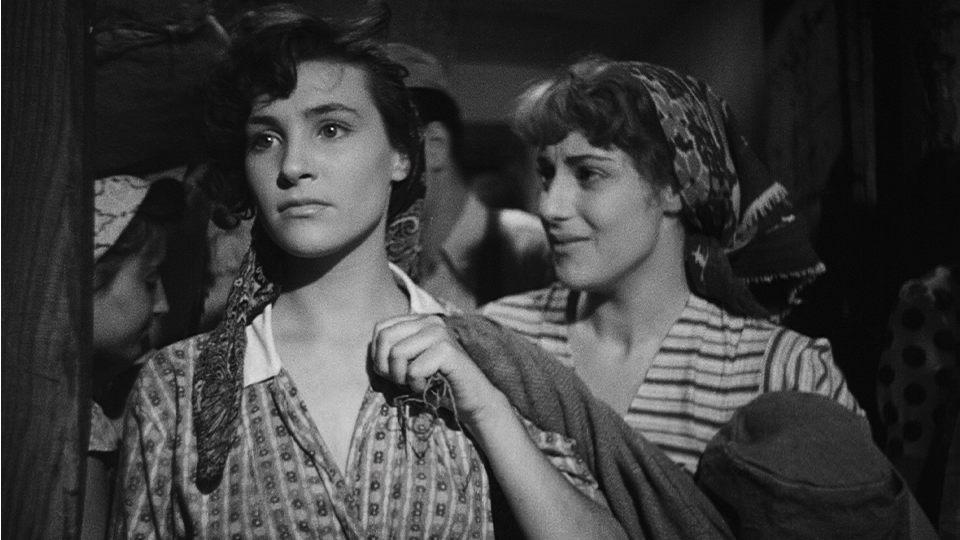
An ambiguous affiliation to the neorealist movement. To give the whole thing a sense of unity, Giuseppe De Santis resorts to torrid eroticism, making use of the unusual gathering of women at work and the personal seductiveness of Silvana Mangano. The mediocrity of the police element of the plot does not prevent the filmmaker from showing the small universe he describes from a wide variety of angles and, at the same time, from making its collective spirit felt, capturing its enthusiasm and disappointments as the manifestations of a homogeneous group. He astutely uses long shots, crane shots in outdoor scenes and choruses sung by women in the rice fields. The main characters (with the exception of the “villain” incarnated by Vittorio Gassman – a conventional and histrionic figure completely out of place in a neorealist context) express the ambivalence of the postwar generation. On one hand, there are their temptations, their frustrations and their tragic consequences; on the other, there are efforts to break out of the rut and recreate a new world. This leads to entirely atypical fight scenes, where the two men remain motionless and passive, while the two women, armed and ready to take action.
Archival highlights
The 4K restoration of Riso Amaro (Giuseppe De Santis, 1949) was carried out by the Fondazione Cineteca di Bologna, in collaboration with Cristaldifilm, using the best available elements preserved at the Cineteca Nazionale. The original camera negative, incomplete and missing 7 of its 14 reels due to severe chemical deterioration, was supplemented with a lavender print held by the Cineteca Nazionale and produced in 1994. Some shots that had been duplicated in the lavender element were replaced with the corresponding shots taken from an earlier-generation vintage positive, in order to improve overall image quality. The same positive and an additional combined duplicate negative were also used to fill further gaps in both image and sound. Cinematographer Luca Bigazzi supervised the restoration work. The work was carried out at the L’Immagine Ritrovata laboratory.
Sterne by Konrad Wolf, 1959
Production Company:
L'Immagine Ritrovata Group / DEFA Stiftung
Synopsis
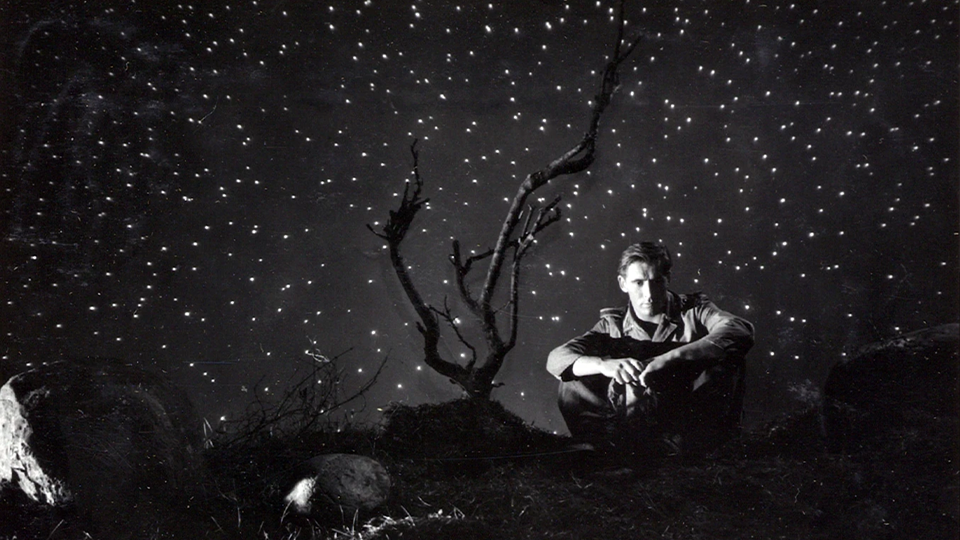
Inspired by the recollections of Bulgarian screenwriter Angel Wagenstein, Sterne, set in 1943, tells the tragic love story of Ruth (Sascha Kruscharska), an imprisoned Greek Jewish teacher, and Walter (Jürgen Frohriep), a German sergeant posted in a Bulgarian transit camp. Behind barbed wire, a fragile connection blossoms between them, borne of thwarted hopes and dreams shattered by the Nazi machine. By staging the story of this brief affair in a camp before deportation to Auschwitz, Konrad Wolf reminds us with sensitivity that love, however fleeting, will always be an act of resistance in the face of the unspeakable.
Archival highlights
This project, through the 4K digitization and restoration, aims to return one of Konrad Wolf’s most important works to its original splendor. Sterne is the first film by a German director to address the deportation of Jews to the Auschwitz extermination camp. The outstanding work of cameraman Werner Bergmann, who shot almost all of Wolf ’s films, deserves special mention. Together with Wolf and set designer Alfred Hirschmeier, he drafted a visual script for the first time. Each shot was planned in detail beforehand, which turned many images into symbols. Sterne is one of the most important anti-fascist films of the DEFA, which deals with the guilt and responsibility of the Germans in the Holocaust and it was shot in co-production with Bulgaria in the area around Sofia. It received a special jury prize at the Cannes Film Festival, however, due to West Germany’s claim to sole representation, the film was billed as an exclusively Bulgarian production and the involvement of DEFA was suppressed. Given its significant historical and social importance, the restoration of this film will allow it to be seen and appreciated by a new generation of viewers.
The First Aerial Journey Across Europe
Production Company:
GP archives
Synopsis
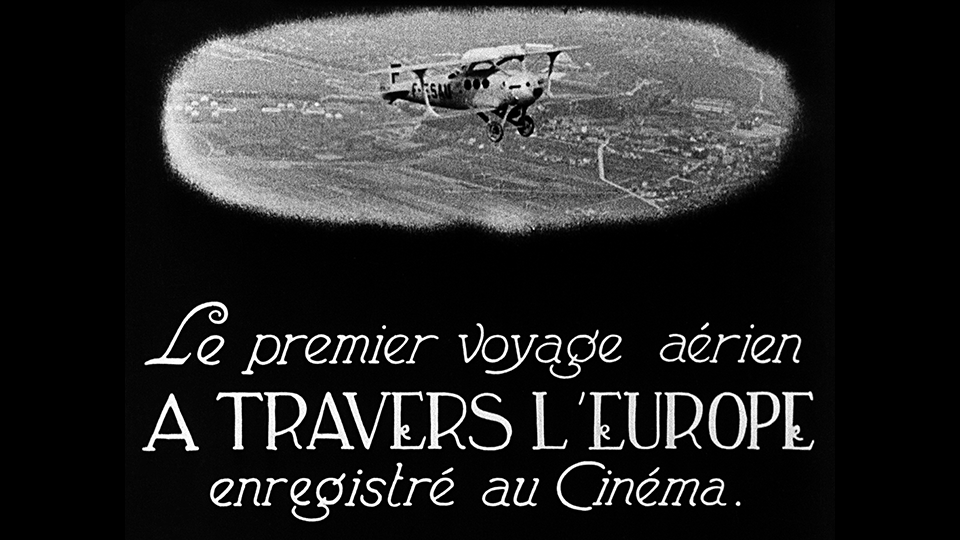
‘The First Aerial Journey Across Europe’ invites viewers to embark on a 90-minute journey aboard two airplanes making the first ever filmed air raid across Central Europe. Alternating between aerial and ground shots, the director and cameraman fly over ten countries and reveal striking landscapes still deeply marked by the traces of the First World War. A technical feat of its time, this documentary produced by Gaumont in 1922 bears witness to the first commercial air flights in Europe.
Long forgotten, ‘The First Aerial Journey Across Europe’ has never been re-released by Gaumont since its première in theaters in 1923.
This first feature-length documentary, restored by GP Archives, is based on the original 35mm nitrate negatives that had been preserved until then, but were scattered and edited in disorder. This restoration therefore faced a double challenge:
to reconstruct a film for which there was no narrative thread and very few intertitles.
to carry out 4K digitization and complete digital restoration of all the material. This restoration work was based on constant reflection to ensure a faithful reproduction of the original work, although some questions remain unanswered and are still under investigation.
The German Retreat and Battle of Arras
Production Company:
IWM (Imperial War Museums)
Synopsis
The restoration of Battle of Arras (1917), completes IWM’s thirty-year project to digitally restore the Big Battle Films (Battle of the Somme, Battle of the Ancre); a groundbreaking trilogy of factual films that raised the status of film in Britain, leading to the first film archive at IWM and the recognition of archive footage as a key element in films about the past.
IWM’s aim was to create accessible versions, appreciated by general audiences, but that reflected current technical and ethical practices for film restoration. For ‘Arras’, this meant a version that was faithful to the distribution prints screened in 1917. Along with the usual defects and damage typical of films preserved from this era, ‘Arras’ brought its own challenges for the restorers – poor documentation, evidence of editing in the archives, and the existence of coloured shots and titles that were incomplete and fading. IWM overcame these challenges with experience gained from the ‘Somme’ and ‘Ancre’, an ethical framework, and innovation in restoration practise, such as the adoption of Cineteca di Bologna’s Edit Decision List, the Flueckiger method to recreate the coloured sequences, and a collaborative and dynamic partnership between IWM and the digital restoration team at the University of Udine, that benefitted the restoration process.
Archival highlights
Battle of Arras was sponsored by the War Office Cinematograph Committee and produced by the Topical Film Company. It was filmed by four documentary and newsreel cameramen, who were employed, billeted, and fed by the Army. They wore the official uniform issued to the press. The cameramen filmed from the opening of Battle of Arras (8/9 April 1917) until the 19th May but also recorded preparatory action in January and March 1917. There are no records about the production of the film and, other than the cameramen, we do not know who made it; the only other named person is William F. Jury, the Booking Director. Our research suggests the production followed the pattern of Battle of the Somme and Battle of the Ancre: the cameramen bringing back the exposed footage and their notes of what they filmed to London, where it was edited by an unnamed producer, assisted by one or more of the cameramen, with Captain Faunthorpe from military intelligence writing the titles. Once the footage was edited a rough cut was screened to War Office officials and then sent to Army Headquarters in France for more scrutiny and censorship. Any cuts identified by the Chief Censor were made back in London. The film was trade shown on 6th June 1917 and premiered on 25th June.
IWM’s restoration of the 16 coloured shots and red intertitles marks a revival of the original nature of the film - no coloured version has been available since the tinted nitrate print was withdrawn from use before the Second World War. The general restoration work to make the film complete, to repair damage and rectify defects has greatly improved the viewing experience. This is the most complete and 'viewable' version since 1917; expert viewers and critics have even remarked on its beauty.