2026 FOCAL International Awards Shortlisted Nominees
The FOCAL Awards celebrate three areas – production, restoration and preservation, and people. All our production categories celebrate the very best use of footage within the production, programme or project.
Please select the award category you wish to view from the drop down box.
2026 Jane Mercer Researcher of the Year Award
2026 Winner
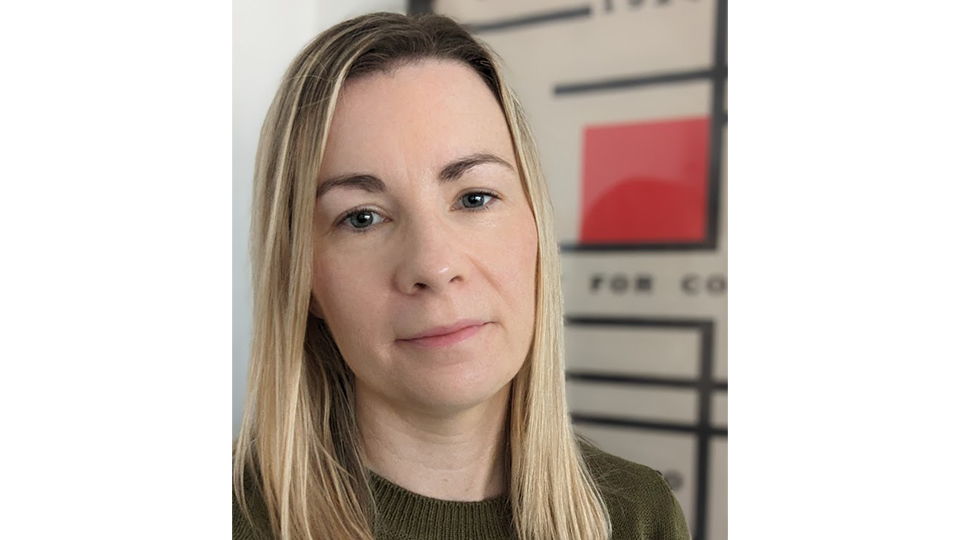
Sophia Doe for 'Once Upon a Time in Space'
Production Company:
KEO Films
Synopsis
Four-part documentary series telling the human stories behind one of our most extraordinary endeavours: the exploration of space.
Moving beyond scientific achievement, it examines the personal experiences of astronauts, cosmonauts, ground-based participants, and the loved ones left behind. Through powerful testimony and intimate, unseen archive, a complex portrait of humanity emerges: one that lays bare both our fragility and boundless curiosity.
The series traces significant milestones in our spacefaring history, from the birth of the Shuttle and the pioneering Space Station Mir to the rise of commercial spaceflight and impact of the Ukraine War.
The lens points upward, yet the story keeps returning to Earth. Accounts of bravery, friendship and tragedy are told against the backdrop of a rapidly changing world, connecting technical and geopolitical developments to lived experience.
Humankind’s journey into space began 70 years ago as a competition between opposing world views: capitalism and communism. It has evolved into a collaborative and unifying endeavour, culminating in the creation of the International Space Station.
Now, as a new space race dawns on a world once again buckling with division, it is those pioneers who have already ventured into the void who hold the wisdom to help guide us forward.
Archival highlights
Space is huge, and so is the NASA archive! But you quickly realise that a lot of US footage feels corporate – it’s the same shots of training and take-off repeated over decades. Finding compelling material round the edges from the 100’s of hours of people floating in space eating M+M’s was a huge task. Many archive producers would be daunted by the scale of the challenge, but Sophia approached it with imagination, vigour and tenacity. She was always positive, worked incredibly hard and her organisation of the material meant she always stayed a few steps ahead of the edits. She was on top of it all – from the personal to the wonders of space as well as the political and cultural context of the last 60 years.
Sophia also took on the near-impossible task of penetrating the world of Russian space archive. Sanctions prevented her from dealing directly with many Russian archives, including the Russian Space Agency, Roscosmos. Instead, she identified and cultivated alternative routes, most crucially trawling 1000s of sparsely logged entries within NASA's tape log, finding a trove of invaluable Russian tapes only accessible due to her strong relationship with NASA. And that made it possible to tell the Russian story. Without that there would be no series.
Every editor works differently, some work with IV first and so needed someone who can see where the story is going and get ahead, some want to see archive for each story before building their sequences. Managing the demands of four different edits and four ways of working was something Sophia excelled at.
With Once Upon a Time in Space, we were looking for personal stories that ran parallel to the history of space exploration. It works best when these stories intersect with global events, whether that be issues of race or international politics. Usually, the big picture stuff is in the background, putting a particular demand on the archive. Sometimes the brief was in retrospect ridiculous – can you find a clip to summarise the relationship between Russia and the US in the mid 80’s? The choices Sophia made were clear, original and helped to shape the series.
With no narration the series required extensive US news reporter sync as contextual scaffolding. Sophia worked with all four editors to review sync early to identify problematic cuts which could be rejected. For any denials she calmly proposed solutions during a tight post schedule with increasing demands on her time.
We were trying to make space exploration small and intimate by prioritising the storyteller, the person in the chair and that meant looking for the personal and the unusual. We wanted to avoid the cliched sequences of rocket launches, technological explanations and mission control gobbledegook. None of it would have been possible without Sophia’s understanding of the ambition, her commitment and patience and eye for detail. A lot of this story is well known, and Sophia was vital in our attempt to tell it in a new way.
Shortlisted
Jackie Clary for 'Counting Crows: Have You Seen Me Lately'
Production Company:
Shark Pig
Synopsis
Catapulted into overnight fame by their massively successful debut album, San Francisco indie rock band Counting Crows and their introspective frontman Adam Duritz were suddenly the biggest rockstars in the world, defiantly facing whatever came next. Counting Crows: Have You Seen Me Lately? captures this pivotal crossroads through revealing interviews and evocative 1990’s archival to craft a rare story of artistic integrity in the spotlight.
Archival highlights
The archival research on this film deserves recognition because it was guided by Jackie Clary’s deep understanding of story and her rare ability to think several steps ahead of the filmmaking process. From the beginning, Jackie approached the archive not as a checklist of assets to secure, but as a living landscape of imagery that needed to be built in service of a specific emotional and narrative arc.
This project presented a clear challenge: there was no complete or conventional archive documenting the band’s earliest and most pivotal years. Many expected materials simply did not exist, and others were scattered across institutional vaults, private collections, and personal garages. Jackie absorbed the story we were trying to tell early on and began sourcing material with an instinct for how it might ultimately function in the edit—seeking images that could hold interiority, contradiction, and tone, not just historical information.
Her discovery of an extensive, privately preserved photographic collection from 1994 to 1997 became a crucial part of that landscape. Working with a small team, Jackie helped oversee the scanning, organization, and contextualization of nearly a thousand images, transforming a dormant archive into a rich visual resource that expanded what the film could express. At the same time, she navigated studio vaults to secure recording and touring footage in a range of formats, often with technical limitations, and worked closely with the creative team to understand how that material could be shaped rather than constrained by those imperfections.
Jackie also earned the trust of photographers, band members, and early collaborators, which led to access to previously unpublished images, contact sheets, scrapbooks, VHS tapes, and personal ephemera. These materials did not dictate the story—but they gave us options, depth, and emotional range.
By consistently anticipating what the film would need before it knew it needed it, Jackie built an archive that allowed me to direct with clarity and intention. That level of story fluency and foresight is what makes this archival work deserving of recognition.
Julieann Galdames for 'Hurricane Katrina: Race Against Time'
Production Company:
Lightbox
Synopsis
When Hurricane Katrina unleashed a catastrophic flood on New Orleans, it exposed far more than the vulnerabilities in the city's faulty levee system. Told through emotional moment-to-moment accounts of survivors and through riveting and immersive archival footage - some of it never before seen - this five-part premium series reveals Katrina as a disaster that was anything but natural.
Archival highlights
The central aim of our series Hurricane Katrina: Race Against Time was to offer viewers an authentic and immersive window into the experiences of those affected by the hurricane as we heard their stories. The production team and Supervising Archival Producer Julieann Galdames knew what would distinguish our project from others was the inclusion of personal archive - footage captured by people who were directly experiencing the unimaginable tragedy and challenges of the storm. Each team member knew how important it was to cultivate relationships with these individuals, build trust in our archival and research process, and ensure we would honor their experiences during Hurricane Katrina.
Julieann was charged with finding archival material that vitally supported the stories our contributors shared with us of their lives in New Orleans before Hurricane Katrina, their struggles and survival during the flooding of their beloved city, and how their lives and the city itself changed in the years since. Those narrative needs were supported across the series authentically through the footage Julieann and her team tracked down.
Among the many moments in the series where this is evidenced is when modern day interviews with contributors are juxtaposed with archival footage of them in 2005:
New Orleanian Kevin Goodman standing outside the Convention Center with his grandbabies in his arms pleading for help
Former U.S. Coast Guard service member Sara Faulkner suspended by a helicopter cable rescuing residents from roofs and balconies
Community organizer Malik Rahim near his home talking about vigilantes with long-guns
From the outset, Julieann methodically mapped out how she would go about finding such material over the two- and half-year production cycle. She knew that speaking first with the local-to-New Orleans residents, filmmakers, film festivals and schools would garner the best found footage. She and her team combed through local newspaper articles to find additional potential contributors and licensors. Julieann made countless calls and had long conversations with people, building direct relationships and vouching for the honesty and integrity the entire team had in their commitment to tell these stories.
Julieann’s thorough canvassing of the New Orleans community also created a network of individuals who would then introduce her to other contacts within the community. On more than one occasion Julieann would help residents rediscover photos and footage they had forgotten they even had in their possession.
Julieann contacted first responders at the local and federal levels to track down footage. She lastly widened her scope eventually to large news organizations and national archive licensors whom she knew had material much of the public had seen before, but that could be given new and additional context by the creative team.
Julieann worked closely with the production and post editing team to ingest and track all the archival footage and stills she and her team found. Due to her meticulous nature, Julieann could identify each piece of footage and confirm respective copyright and ownership rights. This was crucial during the multiple rounds of cuts of each episode which would then be reviewed by Julieann and documented before undergoing production and legal review. Julieann would then capably answer any questions needed during the legal review. Julieann worked tirelessly with licensors, negotiating competitive rates and bulk buys to remain within the approved archival budget. She concisely reported back to the production and creative teams of any challenges in clearing footage and finding comparable archive when needed.
After picture lock of each episode, Julieann efficiently worked through the process of hammering out final details on license agreements, obtained high resolution footage for the online prep and turnover to the finishing team, and oversaw the entire final archival documentation process necessary for delivery.
Lightbox knew from working with her on past projects that Julieann was up for the task from research through delivery. The archival scope of Hurricane Katrina: Race Against Time was a huge undertaking. Julieann’s tenacity, relationship building with all creative, production and post team members, in addition to licensors big and small, was true to form and we could not have been happier with the results.
Katharine Waldrum for 'Boyzone: No Matter What'
Production Company:
Curious Films
Synopsis
Boyzone: No Matter What. They were one of the most successful and iconic boybands of all time – but behind-the-scenes, conflict and rivalry, betrayal and tragedy led to their falling apart. Now, thirty years on, all four remaining members - Ronan Keating, Keith Duffy, Shane Lynch and Michael ‘Mikey’ Graham, as well as their estranged manager, Louis Walsh – reveal the truth of what really happened, the extraordinary highs of their meteoric rise to fame, and the huge costs that being in a boyband had on each of them.
Archival highlights
The archive brought challenges, in that it was both extensive in nature but also limited in intimate moments. However, Katharine’s excellence is evident in the way she masterfully interrogated hundreds of hours of archive footage to find those vital emotional moments, with special care taken to make Stephen Gately a present force throughout the narrative. The archive expertly oscillates between light and dark moments, creating a balanced emotional rhythm that honours both the exhilarating highs and devastating lows of the Boyzone journey. Katharine’s outstanding research utilised every contact and technique to find unseen footage and photos which took the series to a new level. The challenge of the vastness of the footage is it often didn’t reflect the truth of what was happening behind the scenes but by negotiating and hunting down the rushes it allowed us to depict more vulnerable moments that were so vital. What resulted was a series that represents documentary filmmaking at its most impactful - entertaining while illuminating universal human experiences. It transforms a pop culture narrative into a profound meditation on friendship, identity, loss, and resilience.
Nessa Dundon for 'The Hunt for Peter Tobin'
Production Company:
Firecrest Films
Synopsis
On a snowy night in 1991, 15-year-old Vicky Hamilton fails to return home, prompting one of Scotland’s largest missing persons investigations. Posters appear nationwide, but no trace is found. In a new interview, her sister Lindsay recalls the strain on their family. Several days later, Vicky’s purse is discovered near an Edinburgh bus station.
That summer, 18-year-old Dinah McNicol disappears while hitchhiking home from a music festival in Kent. As the early 90s mark a shift in how such cases are handled, her father turns to the newly formed National Missing Persons Helpline, while media coverage on programmes including Crimewatch brings wider attention.
More than 15 years later, in 2006, 23-year-old Angelika Kluk vanishes in Glasgow. The Polish student is later found murdered beneath church floorboards where she had been working. Police trace church handyman Patrick McLaughlin, revealed to be fugitive sex offender Peter Tobin. His arrest raises the chilling possibility that a serial killer had operated across the UK for decades.
Across two episodes, the documentary examines the disappearances of three young women and their lasting impact, featuring archive footage and interviews with families, detectives and forensic experts.
Archival highlights
It’s with the utmost conviction that I nominate Nessa Dundon for her outstanding work as Archive Producer on the award-winning and popular BBC documentary series The Hunt for Peter Tobin.
From the outset, this production faced significant constraints. Our archive budget was severely limited, with strict caps imposed across multiple archive libraries. The editorial ambition of the series, however, was expansive. We needed depth, accuracy, emotional resonance, and visual authority. What we had in resources and schedule was modest; what Nessa delivered was extraordinary. Not only was she working within severe financial parameters across multiple archive libraries, she was doing so at speed as our delivery schedule was typically unrelenting.
Nessa’s understanding of the archive landscape is exceptional. She demonstrated not just familiarity with catalogues, but a forensic comprehension of how collections are structured, cross-referenced, and — crucially — how they can be interrogated beyond surface-level metadata.
Her deep dive into the BBC’s complex, vast and fragmented archive was nothing short of remarkable. Rather than relying on obvious news reports, she explored under-indexed, long-forgotten programming strands. This rigorous search led her to uncover a profoundly significant clip from an episode of the talk show ‘Lowri’. The episode focused on missing people and, by an extraordinary coincidence, featured two families whose loved ones would later be revealed as victims of Peter Tobin — appearing in the same programme 20 years before the bodies were discovered.
This was not just a “find.” It was a moment of genuine documentary power. The clip added emotional gravity and historical poignancy that no reconstruction or retrospective interview could replicate. It embodied the tragic convergence of lives that defines this case. Without Nessa’s depth of knowledge — and her instinct for where to look — this material would have remained buried.
Working within a constrained financial framework requires resilience. Working within it while chasing complex, sensitive material demands tenacity of the highest order.
Many of the news reports from the 1990s that were editorially essential to the series survived only in poor-quality copies. The easy solution would have been to accept degraded versions or compromise on inclusion. Nessa refused to compromise.
She tracked down original broadcast masters and earlier-generation copies wherever they existed. This meant repeated correspondence, persistent negotiation, and patient cross-checking across institutions. It required following faint paper trails and challenging assumptions about what was or wasn’t available.
Tenacity, in Nessa’s case, is not noise or force — it is disciplined persistence. She does not stop when something appears difficult. She finds another route.
The integrity of a crime documentary rests on accuracy. In a story as sensitive as this one, involving multiple victims and grieving families, the margin for error is zero.
Nessa’s approach to verification was meticulous. Every clip was cross-referenced against transmission records. Dates, captions, contextual framing — all were scrutinised. She ensured that what appeared on screen was not just evocative, but correct.
Where multiple versions of material existed, she assessed the provenance and editorial framing of each one. She safeguarded the production from inadvertent misrepresentation. This diligence protected not only the series, but the reputations of the contributors and families who trusted us with their stories.
Her thoroughness extended to financial management. Within tight spending limits across different archive providers, she tracked usage with precision, maximising on-screen value without breaching restrictions. Every second of archive carried weight — creatively and financially — and she treated both with equal seriousness.
Archive producing at its best is not administrative — it is creative. Nessa approached the role as a storyteller. The discovery of the ‘Lowri’ clip is one example of imaginative research thinking. But her creativity extended further. She recognised that degraded archive footage risked distancing contemporary audiences from the emotional immediacy of the events. Rather than accepting technical limitations, she explored the use of AI-driven restoration tools to enhance and clean original copies she had sourced.
Importantly, this enhancement was never cosmetic. It was careful and responsible — improving clarity while preserving authenticity. The result was transformative. Viewers were able to connect with the past in a way that felt immediate and real, rather than archival and remote.
Her imagination lay in understanding that technology could serve truth — not distort it — when used with restraint and integrity.
Above all, Nessa’s work enhanced and protected the integrity of the footage and the film itself. She understood that archive in a documentary about a serial killer must never sensationalise. Context matters. Tone matters. She ensured that material was presented in a way that respected victims and avoided exploitation.
By sourcing higher-quality originals, she prevented the story from feeling tabloid or lurid. By verifying provenance, she ensured accuracy. By navigating rights and budget responsibly, she shielded the production from legal vulnerability. By enhancing footage carefully, she brought clarity without altering meaning.
In a production environment defined by restriction — financial, logistical, and ethical — Nessa Dundon delivered work that was expansive in impact. The Hunt for Peter Tobin went on to win two BAFTA Scotland awards and proved a huge ratings success on both the BBC broadcasts and the iPlayer the series. It would not be the series it is without her.
For these reasons, I wholeheartedly nominate Nessa Dundon for the FOCAL International Awards. She exemplifies the very highest standards of archive research and production.
Sophia Doe for 'Once Upon a Time in Space'
Production Company:
KEO Films
Synopsis
Four-part documentary series telling the human stories behind one of our most extraordinary endeavours: the exploration of space.
Moving beyond scientific achievement, it examines the personal experiences of astronauts, cosmonauts, ground-based participants, and the loved ones left behind. Through powerful testimony and intimate, unseen archive, a complex portrait of humanity emerges: one that lays bare both our fragility and boundless curiosity.
The series traces significant milestones in our spacefaring history, from the birth of the Shuttle and the pioneering Space Station Mir to the rise of commercial spaceflight and impact of the Ukraine War.
The lens points upward, yet the story keeps returning to Earth. Accounts of bravery, friendship and tragedy are told against the backdrop of a rapidly changing world, connecting technical and geopolitical developments to lived experience.
Humankind’s journey into space began 70 years ago as a competition between opposing world views: capitalism and communism. It has evolved into a collaborative and unifying endeavour, culminating in the creation of the International Space Station.
Now, as a new space race dawns on a world once again buckling with division, it is those pioneers who have already ventured into the void who hold the wisdom to help guide us forward.
Archival highlights
Space is huge, and so is the NASA archive! But you quickly realise that a lot of US footage feels corporate – it’s the same shots of training and take-off repeated over decades. Finding compelling material round the edges from the 100’s of hours of people floating in space eating M+M’s was a huge task. Many archive producers would be daunted by the scale of the challenge, but Sophia approached it with imagination, vigour and tenacity. She was always positive, worked incredibly hard and her organisation of the material meant she always stayed a few steps ahead of the edits. She was on top of it all – from the personal to the wonders of space as well as the political and cultural context of the last 60 years.
Sophia also took on the near-impossible task of penetrating the world of Russian space archive. Sanctions prevented her from dealing directly with many Russian archives, including the Russian Space Agency, Roscosmos. Instead, she identified and cultivated alternative routes, most crucially trawling 1000s of sparsely logged entries within NASA's tape log, finding a trove of invaluable Russian tapes only accessible due to her strong relationship with NASA. And that made it possible to tell the Russian story. Without that there would be no series.
Every editor works differently, some work with IV first and so needed someone who can see where the story is going and get ahead, some want to see archive for each story before building their sequences. Managing the demands of four different edits and four ways of working was something Sophia excelled at.
With Once Upon a Time in Space, we were looking for personal stories that ran parallel to the history of space exploration. It works best when these stories intersect with global events, whether that be issues of race or international politics. Usually, the big picture stuff is in the background, putting a particular demand on the archive. Sometimes the brief was in retrospect ridiculous – can you find a clip to summarise the relationship between Russia and the US in the mid 80’s? The choices Sophia made were clear, original and helped to shape the series.
With no narration the series required extensive US news reporter sync as contextual scaffolding. Sophia worked with all four editors to review sync early to identify problematic cuts which could be rejected. For any denials she calmly proposed solutions during a tight post schedule with increasing demands on her time.
We were trying to make space exploration small and intimate by prioritising the storyteller, the person in the chair and that meant looking for the personal and the unusual. We wanted to avoid the cliched sequences of rocket launches, technological explanations and mission control gobbledegook. None of it would have been possible without Sophia’s understanding of the ambition, her commitment and patience and eye for detail. A lot of this story is well known, and Sophia was vital in our attempt to tell it in a new way.